
Russia Wants To Join US Moon Exploration Program | Aero-News Network
Aero-News Network
RSS icon RSS feed
podcast icon MP3 podcast
Subscribe Aero-News e-mail Newsletter Subscribe

Airborne Unlimited -- Most Recent Daily Episodes

Episode Date

Airborne-Monday

Airborne-Tuesday

Airborne-Wednesday Airborne-Thursday

Airborne-Friday

Airborne On YouTube

Airborne-Unlimited-12.08.25

AirborneNextGen-
12.09.25

Airborne-Unlimited-12.10.25

Airborne-FltTraining-12.04.25

AirborneUnlimited-12.05.25

AFE 2025 LIVE MOSAIC Town Hall (Archived): www.airborne-live.net

Sat, Dec 09, 2006

Russia Wants To Join US Moon Exploration Program

RKA Brings Technology And Expertise To The Table

Russia's space agency, RKA, is willing to let bygones be bygones and set aside old rivalries in the new space race. It wants to join NASA in the US agency's planned moon exploration program slated to place a permanent manned presence on the lunar surface.

RKA spokesman Igor Panarin told the Associated Press "We want the agreement to reflect Russia's status as a great space power." He added that Russia will contribute technology rather than money to the project.

As ANN reported, NASA announced plans last Monday to send a four-man team to the moon in 2020 with hopes of establishing a permanently-manned base by 2024.

Russia's state-owned RKK Energiya has proposed its own moon program, but so far hasn't garnered any support from the country's government.

During NASA's manned-moon mission glory years the then Soviet Union launched numerous unmanned moon exploration mission. The USSR even managed to put a couple of rover vehicles on the moon's surface, but the program eventually collapsed following a series of launch failures and booster rocket explosions.

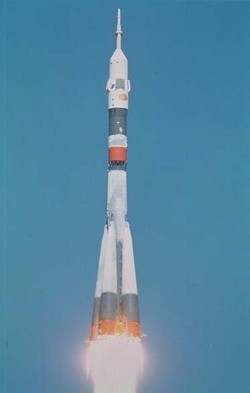
RKA's Panarin envisions a relationship between his agency and NASA much like the one RKA shares with the European Space Agency (ESA). Starting in 2008, RKA will launch commercial satellites using its successful Soyuz rockets from France's Kourou launch facility on the eastern coast of French Guyana in South America. The broad terms of the deal has Russia providing boost capability while ESA maintains the facilities.

NASA remains coy about publishing a figure for a permanent moon base's total cost, but it has said the first mission will likely top $104 billion.

With those kinds of costs involved, Panarin's idea of using RKA's Soyuz rockets might be a better idea than developing new booster technology from scratch as is planned.

FMI: www.nasa.gov, www.federalspace.ru

Advertisement

More News

Aero-News: Quote of the Day (12.07.25)

“This vote sends an undeniable message to Air Transat management: We are unified, resolute, and have earned a contract that reflects today’s industry standards, not the>[...]

ANN's Daily Aero-Linx (12.07.25)

Aero Linx: Beech Aero Club The Beech Aero Club (BAC) is the international type club for owners and pilots of the Beech Musketeer aircraft and its derivatives, the Sport, Super, Sun>[...]

NTSB Final Report: Lafferty Jack Sea Rey

While Landing In The River, The Extended Landing Gear Contacted The Water And The Airplane Nosed Over, Resulting In Substantial Damage Analysis: The pilot of the amphibious airplan>[...]

Classic Aero-TV: The B29 SuperFortress ‘Doc’ - History in Flight

From 2022 (YouTube Edition): Carrying the Legacy of The B-29 For Generations to Come We had a chance to chat with the Executive Director of B-29 Doc, Josh Wells, during their stop >[...]

Airborne 12.08.25: Samaritan’s Purse Hijack, FAA Med Relief, China Rocket Fail

Also: Cosmonaut Kicked Out, Airbus Scales Back, AF Silver Star, Russian A-60 Clobbered A Samaritan’s Purse humanitarian flight was hijacked on Tuesday, December 2, while atte>[...]

blog comments powered by Disqus



Advertisement

Advertisement

Podcasts

Advertisement

© 2007 - 2025 Web Development & Design by Pauli Systems, LC

