
Russia Wants To Join US Moon Exploration Program | Aero-News Network
Aero-News Network
RSS icon RSS feed
podcast icon MP3 podcast
Subscribe Aero-News e-mail Newsletter Subscribe

Airborne Unlimited -- Most Recent Daily Episodes

Episode Date

Airborne-Monday

Airborne-Tuesday

Airborne-Wednesday Airborne-Thursday

Airborne-Friday

Airborne On YouTube

Airborne-Unlimited-12.08.25

AirborneNextGen-
12.09.25

Airborne-Unlimited-12.10.25

Airborne-AffordableFlyers-12.11.25

AirborneUnlimited-12.12.25

AFE 2025 LIVE MOSAIC Town Hall (Archived): www.airborne-live.net

Sat, Dec 09, 2006

Russia Wants To Join US Moon Exploration Program

RKA Brings Technology And Expertise To The Table

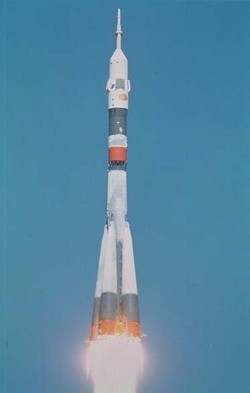
Russia's space agency, RKA, is willing to let bygones be bygones and set aside old rivalries in the new space race. It wants to join NASA in the US agency's planned moon exploration program slated to place a permanent manned presence on the lunar surface.

RKA spokesman Igor Panarin told the Associated Press "We want the agreement to reflect Russia's status as a great space power." He added that Russia will contribute technology rather than money to the project.

As ANN reported, NASA announced plans last Monday to send a four-man team to the moon in 2020 with hopes of establishing a permanently-manned base by 2024.

Russia's state-owned RKK Energiya has proposed its own moon program, but so far hasn't garnered any support from the country's government.

During NASA's manned-moon mission glory years the then Soviet Union launched numerous unmanned moon exploration mission. The USSR even managed to put a couple of rover vehicles on the moon's surface, but the program eventually collapsed following a series of launch failures and booster rocket explosions.

RKA's Panarin envisions a relationship between his agency and NASA much like the one RKA shares with the European Space Agency (ESA). Starting in 2008, RKA will launch commercial satellites using its successful Soyuz rockets from France's Kourou launch facility on the eastern coast of French Guyana in South America. The broad terms of the deal has Russia providing boost capability while ESA maintains the facilities.

NASA remains coy about publishing a figure for a permanent moon base's total cost, but it has said the first mission will likely top $104 billion.

With those kinds of costs involved, Panarin's idea of using RKA's Soyuz rockets might be a better idea than developing new booster technology from scratch as is planned.

FMI: www.nasa.gov, www.federalspace.ru

Advertisement

More News

Aero-News: Quote of the Day (12.09.25)

“We respectfully call on the City of Mesa to: 1. Withdraw the landing fee proposal immediately 2. Engage with the aviation community before making decisions that impact safet>[...]

ANN's Daily Aero-Term (12.09.25): High Speed Taxiway

High Speed Taxiway A long radius taxiway designed and provided with lighting or marking to define the path of aircraft, traveling at high speed (up to 60 knots), from the runway ce>[...]

ANN's Daily Aero-Linx (12.09.25)

Aero Linx: International Federation of Airworthiness (IFA) IFA uniquely combines together all those with responsibility for policies, principles and practices concerned with the co>[...]

NTSB Final Report: Diamond Aircraft Ind Inc DA20C1 (A1); Robinson Helicopter R44

Controller’s Expectation That VW02 Would Have Departed Sooner Led To An Inadequate Scan And Loss Of Situational Awareness Analysis: A Robinson R-44 helicopter N744AF, VW02 (V>[...]

ANN FAQ: Q&A 101

A Few Questions AND Answers To Help You Get MORE Out of ANN! 1) I forgot my password. How do I find it? 1) Easy... click here and give us your e-mail address--we'll send it to you >[...]

blog comments powered by Disqus



Advertisement

Advertisement

Podcasts

Advertisement

© 2007 - 2025 Web Development & Design by Pauli Systems, LC

