Cites Lack Of Experience In The Model As A Contributing
Factor
The NTSB has released a probable cause report for an accident
which fatally injured a 74-year-old pilot who had only recently
returned to flying after a 25 years out of the cockpit. The pilot
held a commercial pilot certificate with airplane single-engine
land and instrument airplane ratings. His last medical certificate
was a second-class medical issued on March 8, 1991.
CH 701 File Photo
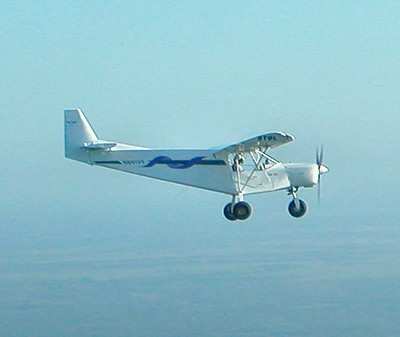
The pilot’s logbook indicated that as of March 1984, the
pilot had accumulated a total of 755 hours of flight time. He did
not fly again until December 2009, when he began flying with a
flight instructor. He then accumulated 5.4 hours of instructional
flight time which included a flight review dated May 26, 2010.
The pilot’s flight instructor stated the pilot stopped
flying a number of years ago and she was giving him recurrent
training in preparation for a flight review so he could exercise
sport pilot privileges. She stated they flew a Cessna 152 and they
spoke about the differences between that airplane and the Zenith
701 that the pilot had just built. She stated the pilot did a lot
of research and they discussed the 701’s
“…supposed inability of the elevator to work at slow
airspeed without the propwash when the RPMs are pulled back.”
She stated that because of this characteristic, they practiced
stalls and landings using a higher than normal power setting.
The Zenith factory was contacted and there was no record that
the pilot had flown in a CH701 when he visited the factory. No
evidence was found to indicate the pilot had ever flown a Zenith
CH701 aircraft prior to the accident.

According to the probable cause report,
the accident occurred on the first test flight following the
completion of the amateur-built airplane. The pilot performed
high-speed taxi runs followed by a takeoff. The pilot’s
flight instructor, who was at the airport watching, observed the
airplane southwest of the airport in a spin, from which it
recovered. The pilot then flew back to the airport, entered the
traffic pattern, and made a radio call that he was going to land.
On final approach the airplane appeared to be unstable. The pilot
added power and performed a go-around. The airplane came around
again for another approach and landing.
The airplane appeared to be stable in the traffic pattern until
it was on final approach, when it appeared to be unstable as if it
were in slow flight. When the airplane was about 200 feet above the
ground, the engine noise decreased and the nose immediately dropped
along with the right wing. The airplane then impacted terrain short
of the approach end of the runway. A postcrash examination of the
airplane and engine did not reveal any mechanical failures or
malfunctions, nor did the pilot mention any problems with the
airplane during his radio calls.
The NTSB determined that the probable cause of the accident was
the pilot’s failure to maintain adequate airspeed while on
final approach, which resulted in an aerodynamic stall.
Contributing to the accident was the pilot's lack of experience in
the model of airplane.



 Aero-News: Quote of the Day (12.09.25)


 See All