
FAA: Wildlife Strike Reporting Continues To Increase | Aero-News Network
Aero-News Network
RSS icon RSS feed
podcast icon MP3 podcast
Subscribe Aero-News e-mail Newsletter Subscribe

Airborne Unlimited -- Most Recent Daily Episodes

Episode Date

Airborne-Monday

Airborne-Tuesday

Airborne-Wednesday Airborne-Thursday

Airborne-Friday

Airborne On YouTube

Airborne-SpecialEpisode-12.15.25

AirborneNextGen-
12.16.25

Airborne-Unlimited-12.10.25

Airborne-AffordableFlyers-12.11.25

AirborneUnlimited-12.12.25

AFE 2025 LIVE MOSAIC Town Hall (Archived): www.airborne-live.net

Thu, Aug 06, 2015

FAA: Wildlife Strike Reporting Continues To Increase

Agencies Proactive Approach Is Improving Voluntary Reporting

Wildlife strike reporting for both commercial and general aviation airports continues to increase, according to a new report by renowned wildlife expert Dr. Richard A. Dolbeer. At the request of the FAA, Dolbeer recently published the wildlife report, which shows that 47 percent of the wildlife strikes that occurred from 2009 to 2013 were reported to the FAA’s National Wildlife Strike Database. That number is up from 42 percent for the previous reporting period of 2004 to 2008.

The report concludes that the FAA’s proactive continuing outreach actions with its aviation industry and government partners have improved the quantity and quality of voluntary wildlife strike reporting. The report also highlights a decrease in the number of damaging strikes, greater reporting of birds of all sizes, and the decrease of damaging strikes within the airport environment. Other findings note a decrease in the average bird size involved in strikes, and an increase in the number of reports that identify the bird species.
 
The report concludes that the level of reporting is adequate to track national trends in wildlife strikes, so mandatory reporting is not necessary at this time. It also provides a scientific basis for the FAA to develop policies and guidance to mitigate wildlife strikes; and the reporting process complies with International Civil Aviation Organization standards.

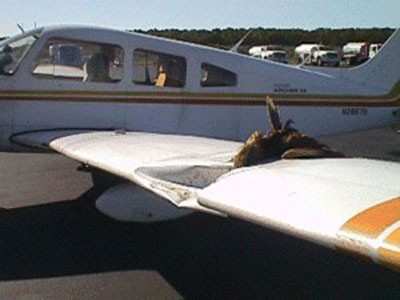
(FAA image: Airplane damaged by bird strike)

FMI: Report http://www.faa.gov/airports/airport_safety/wildlife/

Advertisement

More News

Aero-News: Quote of the Day (12.18.25)

“These new aircraft strengthen our ability to respond quickly, train effectively and support communities nationwide. Textron Aviation has been a steadfast supporter in helpin>[...]

Classic Aero-TV: Viking Twin Otter 400--Bringing the DHC-6 Back Into Production

From 2011 (YouTube Edition): Rugged, Legendary, STOL Twin Makes A Comeback The de Havilland Twin Otter is an airplane with a long history, and it gained a reputation as a workhorse>[...]

NTSB Final Report: Rans Employee Flying Club Rans S-6ES Coyote II

A Wind Gust Lifted The Right Wing And The Airplane Turned To The Left Analysis: The pilot was departing from a 2,395-ft-long by 50-ft-wide turf runway. The pilot reported that afte>[...]

ANN FAQ: Submit a News Story!

Have A Story That NEEDS To Be Featured On Aero-News? Here’s How To Submit A Story To Our Team Some of the greatest new stories ANN has ever covered have been submitted by our>[...]

ANN's Daily Aero-Term (12.18.25): Braking Action Advisories

Braking Action Advisories When tower controllers receive runway braking action reports which include the terms “medium," “poor," or “nil," or whenever weather con>[...]

blog comments powered by Disqus



Advertisement

Advertisement

Podcasts

Advertisement

© 2007 - 2025 Web Development & Design by Pauli Systems, LC

