Mon, May 06, 2024
Lake Amphibian Club (LAC) Received Approximately 27 Reports Of Cracks In The Wing Rear Spar Web
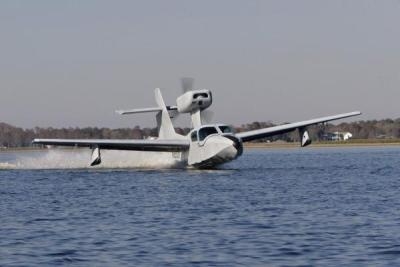
The FAA has issued a Special Airworthiness Information Bulletin (SAIB) that alerts all owners, operators, maintenance technicians, and inspectors of Revo Incorporated Model Colonial C-1, Colonial C-2, Lake LA-4, Lake LA-4A, Lake LA-4P, Lake LA-4-200, Lake Model 250 (including those modified in accordance with Supplemental Type Certificate (STC) SA469NE) and Lake 270 Turbo Renegade (Model 250 with STC AS469NE as noted in TCDS 1A13 Note 8) aircraft to potential cracks in the wing rear attach beam assembly and hole-quality issues that have been identified in a significant number of aircraft.
At this time, the document notes that this airworthiness concern is not an unsafe condition that would warrant airworthiness directive (AD) action under Title 14 of the Code of Federal Regulations (14 CFR) part 39.
The SAIB reports that over the past 45 years, the Lake Amphibian Club (LAC) received approximately 27 reports of cracks in the wing rear spar web that were visible in the aft wheel well. In addition, there is one report of elongated bolt holes in the wing to fuselage attach fittings. The information in the SAIB was provided to us by LAC. The potential effect on the aircraft’s strength is prompting the FAA to issue this SAIB.
The FAA recommends owners and operators perform the following inspections:
- Inspect all wing attach hardware for corrosion, loose rivets, witness marks indicating movement in the joint and bolt, torque, and condition. Note that the bolts may need to be loosened or removed to determine if gaps exist.
- Inspect all wing attach fittings for security, wear, corrosion, damage, and condition of sealant at fuselage.
- Inspect wing aft beam assembly for damage, distortion, corrosion, and general condition. Perform close visual inspection around the lightning holes near the large cut out in the aft web.
- Inspect wing tips for general security and condition – rock wing fore and aft to check for looseness at wing attach points.
- Report all inspection findings using the FAA’s Service Difficulty Reporting (SDR) System Site at https://sdrs.faa.gov/. When filing SDRs, please include as much information as possible. For example, if the spar had been replaced, if there are any shims or gaps, and any alterations that might affect the durability of the spar. Alternatively, inspection findings may be reported directly to the Lake Amphibian Club using the contact information below.
- If cracks, gaps, or elongated holes are found, repair or replace parts in accordance with the manufacturer’s instructions, or using other methods, techniques, and practices acceptable to the Administrator provided in FAA Advisory Circular AC 43.13-1B.
The inspections above can be performed during pre-flight, annual, or 100-hour inspections. The FAA also recommends that the above inspections also be performed following a water loop incident or accident, wing impact damage/incident or accident, landing gear impact damage/incident or accident, or other cases where the wing may have incurred greater than normal torsion stresses applied to the rear attachment area.
More News
From 2023 (YouTube Edition): "Ain’t Your Daddy’s Super Cub”—Don Wade Co-owned by Don and Ron Wade—the former of Don’s Dream Machines, a storied >[...]
Pilot-Rated Passenger Reported That The Pilot Did Not Adequately “Round Out” The Landing Flare And The Airplane Bounced And Yawed To The Right Analysis: The pilot state>[...]
Dead Reckoning Dead reckoning, as applied to flying, is the navigation of an airplane solely by means of computations based on airspeed, course, heading, wind direction, and speed,>[...]
Aero Linx: Lake Amphibian Club This website is created and sponsored by the Lake Amphibian Club, to help spread the word about these wonderful, versatile amphibians that can land j>[...]
“I am deeply honored to be sworn in as NASA administrator. NASA’s mission is as imperative and urgent as ever — to push the boundaries of human exploration, ignit>[...]



 Classic Aero-TV: In Praise of Alabamas Patriot Aircraft USA


 See All