
JPA Enjoys RC Helicoptering at Home | Aero-News Network
Aero-News Network
RSS icon RSS feed
podcast icon MP3 podcast
Subscribe Aero-News e-mail Newsletter Subscribe

Airborne Unlimited -- Most Recent Daily Episodes

Episode Date

Airborne-Monday

Airborne-Tuesday

Airborne-Wednesday Airborne-Thursday

Airborne-Friday

Airborne On YouTube

Airborne-Unlimited-12.08.25

AirborneNextGen-
12.02.25

Airborne-Unlimited-12.03.25

Airborne-FltTraining-12.04.25

AirborneUnlimited-12.05.25

AFE 2025 LIVE MOSAIC Town Hall (Archived): www.airborne-live.net

Wed, Dec 10, 2025

JPA Enjoys RC Helicoptering at Home

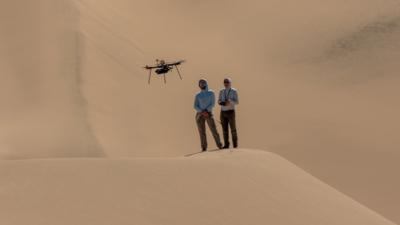
Nav Systems Find Great Test Range in the Mojave

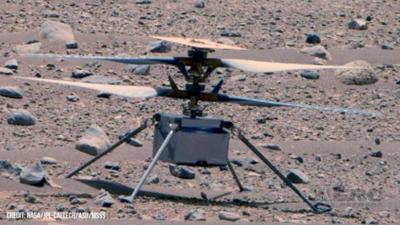
NASA’s Jet Propulsion Laboratory has been working on their future Martian helicopters, after Ingenuity was such a smashing success.

Surprisingly, it’s kind of difficult to ship a helicopter to Mars, given the distance, so they’ve had to search around to see if the meme is true that “we have Mars at home”. The closest we got is the Dumont Dunes, in the Mojave Desert, and so far it’s working pretty well. Researchers have been designing the next generation of martian rotorcraft using the arid region. Sure, the gravity is different, the sand isn’t the same, and the winds aren’t as brutal as Mars… but the cost savings really help those developmental dollars go far! As it happens, the most important part of testing in the Mojave is that featurelessness: Navigation systems need to be trained on endless sands and rolling landscapes.

The Extended Robust Aerial Autonomy program was chosen along with 24 other projects for continuation earlier this year. They’ll follow up on the Ingenuity project with a bigger, longer program now that the first helo proved the concept sound. The navigational weakness of Ingenuity is being tackled now, since its last few flights became difficult among the rolling dunes. 

“Ingenuity was designed to fly over well-textured terrain, estimating its motion by looking at visual features on the ground. But eventually it had to cross over blander areas where this became hard,” said Roland Brockers, a JPL researcher and drone pilot. “We want future vehicles to be more versatile and not have to worry about flying over challenging areas like these sand dunes.”

FMI: www.jpl.nasa.gov

Advertisement

More News

Aero-News: Quote of the Day (12.07.25)

“This vote sends an undeniable message to Air Transat management: We are unified, resolute, and have earned a contract that reflects today’s industry standards, not the>[...]

ANN's Daily Aero-Linx (12.07.25)

Aero Linx: Beech Aero Club The Beech Aero Club (BAC) is the international type club for owners and pilots of the Beech Musketeer aircraft and its derivatives, the Sport, Super, Sun>[...]

NTSB Final Report: Lafferty Jack Sea Rey

While Landing In The River, The Extended Landing Gear Contacted The Water And The Airplane Nosed Over, Resulting In Substantial Damage Analysis: The pilot of the amphibious airplan>[...]

Classic Aero-TV: The B29 SuperFortress ‘Doc’ - History in Flight

From 2022 (YouTube Edition): Carrying the Legacy of The B-29 For Generations to Come We had a chance to chat with the Executive Director of B-29 Doc, Josh Wells, during their stop >[...]

Airborne 12.08.25: Samaritan’s Purse Hijack, FAA Med Relief, China Rocket Fail

Also: Cosmonaut Kicked Out, Airbus Scales Back, AF Silver Star, Russian A-60 Clobbered A Samaritan’s Purse humanitarian flight was hijacked on Tuesday, December 2, while atte>[...]

blog comments powered by Disqus



Advertisement

Advertisement

Podcasts

Advertisement

© 2007 - 2025 Web Development & Design by Pauli Systems, LC

