
JPA Enjoys RC Helicoptering at Home | Aero-News Network
Aero-News Network
RSS icon RSS feed
podcast icon MP3 podcast
Subscribe Aero-News e-mail Newsletter Subscribe

Airborne Unlimited -- Most Recent Daily Episodes

Episode Date

Airborne-Monday

Airborne-Tuesday

Airborne-Wednesday Airborne-Thursday

Airborne-Friday

Airborne On YouTube

Airborne-Unlimited-12.08.25

AirborneNextGen-
12.02.25

Airborne-Unlimited-12.03.25

Airborne-FltTraining-12.04.25

AirborneUnlimited-12.05.25

AFE 2025 LIVE MOSAIC Town Hall (Archived): www.airborne-live.net

Wed, Dec 10, 2025

JPA Enjoys RC Helicoptering at Home

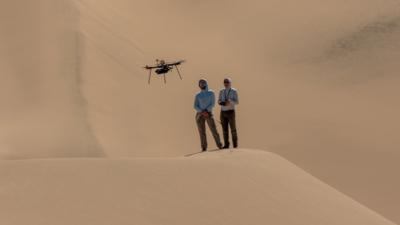
Nav Systems Find Great Test Range in the Mojave

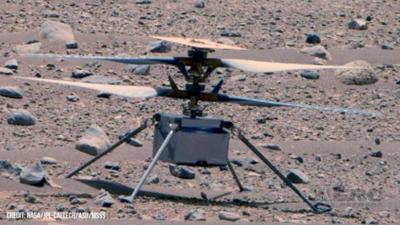
NASA’s Jet Propulsion Laboratory has been working on their future Martian helicopters, after Ingenuity was such a smashing success.

Surprisingly, it’s kind of difficult to ship a helicopter to Mars, given the distance, so they’ve had to search around to see if the meme is true that “we have Mars at home”. The closest we got is the Dumont Dunes, in the Mojave Desert, and so far it’s working pretty well. Researchers have been designing the next generation of martian rotorcraft using the arid region. Sure, the gravity is different, the sand isn’t the same, and the winds aren’t as brutal as Mars… but the cost savings really help those developmental dollars go far! As it happens, the most important part of testing in the Mojave is that featurelessness: Navigation systems need to be trained on endless sands and rolling landscapes.

The Extended Robust Aerial Autonomy program was chosen along with 24 other projects for continuation earlier this year. They’ll follow up on the Ingenuity project with a bigger, longer program now that the first helo proved the concept sound. The navigational weakness of Ingenuity is being tackled now, since its last few flights became difficult among the rolling dunes. 

“Ingenuity was designed to fly over well-textured terrain, estimating its motion by looking at visual features on the ground. But eventually it had to cross over blander areas where this became hard,” said Roland Brockers, a JPL researcher and drone pilot. “We want future vehicles to be more versatile and not have to worry about flying over challenging areas like these sand dunes.”

FMI: www.jpl.nasa.gov

Advertisement

More News

NTSB Final Report: Patriot Aircraft LLC CX1900A

After Draining Both Wing Fuel Tanks, A Significant Amount Of Water Was Observed In The Right Wing Fuel Tank Analysis: The pilot, who was also the owner of the experimental amateur->[...]

Aero-News: Quote of the Day (12.06.25)

“Airbus apologises for any challenges and delays caused to passengers and airlines by this event. The Company thanks its customers, the authorities, its employees and all rel>[...]

ANN's Daily Aero-Term (12.06.25): High Speed Taxiway

High Speed Taxiway A long radius taxiway designed and provided with lighting or marking to define the path of aircraft, traveling at high speed (up to 60 knots), from the runway ce>[...]

ANN's Daily Aero-Linx (12.06.25)

Aero Linx: Taylorcraft Foundation, Inc. The Taylorcraft Foundation is exclusively organized for charitable, educational & scientific activities and will preserve the history an>[...]

Airborne-NextGen 12.02.25: Honda eVTOL, Arctus High-Alt UAS, Samson Patent

Also: USAF Reaper Accident, Baikonur Damage, Horizon eVTOL IFR/FIKI, New Glenn Update Honda has outlined its clearest timeline yet for its entry into the world of electric vertical>[...]

blog comments powered by Disqus



Advertisement

Advertisement

Podcasts

Advertisement

© 2007 - 2025 Web Development & Design by Pauli Systems, LC

