Tue, Sep 15, 2009
Pilot Failed To Fly A "Stabilized Approach"
 The NTSB has determined that pilot
error was the cause of a 2007 incident in which two people were
killed when a Cessna 500 skidded off a wet runway during landing,
hit a house adjacent to the airport, and exploded on impact.
The NTSB has determined that pilot
error was the cause of a 2007 incident in which two people were
killed when a Cessna 500 skidded off a wet runway during landing,
hit a house adjacent to the airport, and exploded on impact.
The crash killed the pilot, 72-year-old Hugh Rains of Wichita
Falls, Texas, and 71-year-old Janet Brady of Conway, who was in her
home. The plane hit Brady's house after impacting the airport jet
blast deflector and running through the perimeter fence. One
passenger on board the aircraft survived the crash
VFR conditions prevailed at the time of the accident, but there
was standing water on the runway due to an earlier rain shower.
The NTSB probable cause report says:
The twin-engine turbojet airplane was attempting to land on a
runway with standing water when the accident occurred. Before the
landing attempt, the pilot was told that the runway was wet from a
recent rain shower. Witnesses reported seeing the airplane on the
runway traveling at a high speed and then increase engine power to
abort the landing with about 1/4 of the runway remaining.
The surviving passenger reported that the runway was "soaked and
shiny with water." He stated that the airplane landed hard and
fishtailed during the landing roll. During the aborted landing the
airplane impacted a jet-blast deflector located off the departure
end of the runway. The airplane then proceeded through the airport
perimeter fence and impacted a residential structure before coming
to a stop. The airplane and residential structure were destroyed
during a postaccident fire. An examination of the airframe and
engines did not reveal any anomalies associated with a preimpact
failure or malfunction. The airplane was not equipped with thrust
reversers or an anti-skid braking system. Radar track data analysis
indicated that when the airplane was about 1/4 mile from the end of
the runway it was approximately 16 knots above its target landing
reference speed (Vref) and had a descent rate of 1,150 feet per
minute. The runway was 4,875 feet long. The calculated landing
distance for a runway with standing water is 4,789 feet.
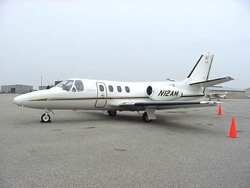
Cessna Citation 500 File
Photo
The National Transportation Safety Board determines the probable
cause(s) of this accident as follows. The pilot's failure to fly a
stabilized approach and his delayed decision to abort the landing.
Contributing to the accident was the standing water on the
runway.
More News
Light Gun A handheld directional light signaling device which emits a brilliant narrow beam of white, green, or red light as selected by the tower controller. The color and type of>[...]
“We have performed extensive ground testing by comparing warm up times, full power tethered pulls, and overall temperatures in 100 degree environments against other aircraft >[...]
While Taxiing To Parking The Right Landing Gear Leg Collapsed, Resulting In Substantial Damage Analysis: The pilot made a normal approach with full flaps and landed on the runway. >[...]
From 2014 (YouTube Edition): Exotic Rebuild Reveals Aerial Work Of Art During EAA AirVenture 2014, ANN's Michael Maya Charles took the time to get a history lesson about a great ai>[...]
Also: Project Talon, McFarlane Acquisition, Sky-Tec Service, JPL Earth Helo Tests Bombardier has earned a round of applause from the business aviation community, celebrating the fo>[...]



 ANN's Daily Aero-Term (12.13.25): Light Gun


 See All