
AMC Publishes KC-135 Accident Investigation | Aero-News Network
Aero-News Network
RSS icon RSS feed
podcast icon MP3 podcast
Subscribe Aero-News e-mail Newsletter Subscribe

Airborne Unlimited -- Most Recent Daily Episodes

Episode Date

Airborne-Monday

Airborne-Tuesday

Airborne-Wednesday Airborne-Thursday

Airborne-Friday

Airborne On YouTube

Airborne-SpecialEpisode-12.15.25

AirborneNextGen-
12.16.25

Airborne-Unlimited-12.10.25

Airborne-AffordableFlyers-12.11.25

AirborneUnlimited-12.12.25

AFE 2025 LIVE MOSAIC Town Hall (Archived): www.airborne-live.net

Thu, Dec 21, 2006

AMC Publishes KC-135 Accident Investigation

Two Aircraft Damaged In September Crash At Manas Airport In Kyrgyz Republic

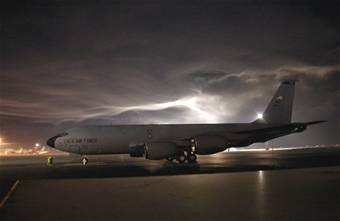
The US Air Force's Air Mobility Command (AMC) today released the results of its investigation into the September 26 KC-135R aircraft accident at Manas International Airport, Bishkek, Kyrgyz Republic.

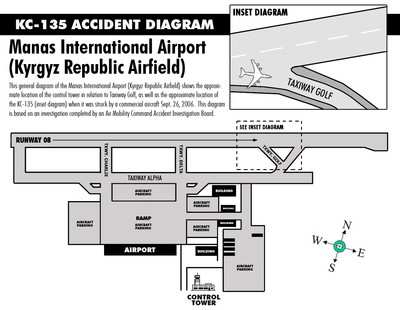
On September 26, at approximately 8:03 p.m. local time, a KC-135R tanker landed at Manas International Airport following a combat mission over Afghanistan. After landing, the KC-135R was parked at the intersection of the active runway and a taxiway while the crew awaited clarification on instructions from the air traffic control tower.

The tanker was struck by a departing Kyrgyz TU-154. The TU-154's right wing struck the fairing of the KC-135R's number 1 engine nearly severing it from aircraft and destroying a portion of its left wing.

The TU-154 lost approximately six feet of its right wingtip, but was able to get airborne and return to the airport for an emergency landing with no additional damage to the aircraft.

AMC says the collision was clearly an accident and not the result of any intentional conduct. The Accident Investigation Board (AIB) convened by AMC determined the accident was caused by a Kyrgyzaeronavigation air traffic controller who cleared the TU-154 for takeoff without verifying the tanker was clear of the runway.

Besides the controller, the AIB identified several contributing factors involving the tanker's crew, conflicting published airport notices, and a contract tower liaison officer employed by the US Government to facilitate communication between the tower and US aircrews.

Although the AIB found the air traffic controller primarily at fault, the tanker crew and tower liaison shared responsibility for ensuring the tanker safely cleared the runway after landing. AMC says the accident might have been avoided had the crew and liaison exercised better awareness of the situation.

None of the aircrew or passengers onboard the TU-154 sustained any injuries. One KC-135 crewmember sustained minor abrasions while evacuating the aircraft.

The AIB determined the following factors also contributed to the mishap:

  • The Kyrgyz air traffic controller's instruction to vacate at taxiway Golf after dark conflicted with a published Notice to Airmen (NOTAM) that limited that taxiway's use to daylight hours. The liaison did not clarify the apparent discrepancy
  • After questioning the Kyrgyz controller's instruction to vacate the runway at taxiway Golf, the liaison instructed the tanker crew to hold short of Alpha. The mishap KC-135R crew misunderstood the liaison's instructions and responded "holding short of Golf." The liaison failed to catch the read-back error
  • The Kyrgyz controller failed to maintain awareness of the tanker's location
  • The liaison failed to maintain situational awareness and intervene when the controller's actions endangered the KC-135R and its aircrew

The tanker and its crew is assigned to the 92nd Air Refueling Wing, Fairchild AFB, WA. While deployed at Manas AB, they were assigned to US Central Command's 376th Air Expeditionary Wing flying missions supporting coalition aircraft over Afghanistan.

FMI: www.af.mil

Advertisement

More News

Aero-News: Quote of the Day (12.18.25)

“These new aircraft strengthen our ability to respond quickly, train effectively and support communities nationwide. Textron Aviation has been a steadfast supporter in helpin>[...]

Classic Aero-TV: Viking Twin Otter 400--Bringing the DHC-6 Back Into Production

From 2011 (YouTube Edition): Rugged, Legendary, STOL Twin Makes A Comeback The de Havilland Twin Otter is an airplane with a long history, and it gained a reputation as a workhorse>[...]

NTSB Final Report: Rans Employee Flying Club Rans S-6ES Coyote II

A Wind Gust Lifted The Right Wing And The Airplane Turned To The Left Analysis: The pilot was departing from a 2,395-ft-long by 50-ft-wide turf runway. The pilot reported that afte>[...]

ANN FAQ: Submit a News Story!

Have A Story That NEEDS To Be Featured On Aero-News? Here’s How To Submit A Story To Our Team Some of the greatest new stories ANN has ever covered have been submitted by our>[...]

ANN's Daily Aero-Term (12.18.25): Braking Action Advisories

Braking Action Advisories When tower controllers receive runway braking action reports which include the terms “medium," “poor," or “nil," or whenever weather con>[...]

blog comments powered by Disqus



Advertisement

Advertisement

Podcasts

Advertisement

© 2007 - 2025 Web Development & Design by Pauli Systems, LC

