
Report: NASA Schedule Will Fall Behind Without Increased Funding | Aero-News Network
Aero-News Network
RSS icon RSS feed
podcast icon MP3 podcast
Subscribe Aero-News e-mail Newsletter Subscribe

Airborne Unlimited -- Most Recent Daily Episodes

Episode Date

Airborne-Monday

Airborne-Tuesday

Airborne-Wednesday Airborne-Thursday

Airborne-Friday

Airborne On YouTube

Airborne-Unlimited-12.01.25

AirborneNextGen-
12.02.25

Airborne-Unlimited-12.03.25

Airborne-AffordableFlyers-11.20.25

AirborneUnlimited-11.21.25

LIVE MOSAIC Town Hall (Archived): www.airborne-live.net

Sun, Apr 19, 2009

Report: NASA Schedule Will Fall Behind Without Increased Funding

CBO Says $2 Billion Boost Needed To Avoid Delay Of Constellation Program

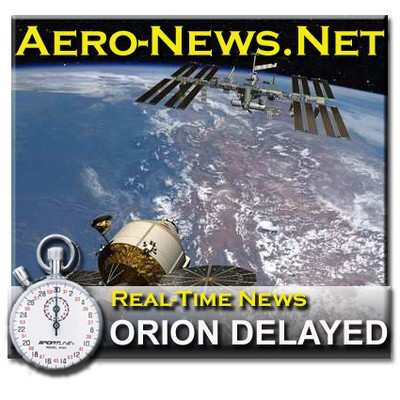
According to a report released last week by the Congressional Budget Office, the National Aeronautics and Space Administration will fail to meet its projected schedule over the next decade, unless funding to the agency is increased by $2 billion a year.

Florida Today reports that based on the analysis of budget scenarios to fulfill plans for NASA mapped out by President George W. Bush in 2004, the CBO said, "If NASA's funding was maintained at $19.1 billion annually and the agency realized cost growth in its programs consistent with the average for 72 of its past programs, its planned schedules for spaceflight programs would be delayed."

At the current funding level, the report said "the initial operating capability for Ares 1 and Orion would be pushed to late 2016; the return of humans to the moon would slip (from 2020) to 2023; and 15 of 79 science missions would be delayed beyond 2025."

In its analysis, the CBO also projected probable outcomes of increasing NASA's budget:

With a $2 billion increase to $21.1 billion annually, the Constellation program and the Shuttle program retirement would be able to meet planned schedules, but 15 out of 79 planned space missions would have to be cut or delayed until after 2025.

With a nearly $4 billion increase to $23.8 billion annually, the Constellation program and planned missions would stay on schedule, and the Shuttle program could be extended until 2015 - thus eliminating the gap in US spaceflight capability to the International Space Station.

A recent statement written by former astronaut James Lovell calls for sufficient financing for NASA to complete the work it has started. In part, it reads, "It is imperative that NASA receive sufficient funds from the national budget to move on to the next phase of space exploration under the Constellation program.

"Provided that President Obama holds true on his promise of $2 billion in additional funding for the program, NASA will be able to continue its great work and ensure that hundreds of thousands keep their jobs, allowing the work and dollars for the space program to remain within the US economy.

"This is not a bailout for the agency, but necessary financing to accomplish all that NASA has been tasked with doing."

FMI: www.nasa.gov, www.cbo.gov

Advertisement

More News

ANN's Daily Aero-Term (12.01.25): Convective SIGMET

Convective SIGMET A weather advisory concerning convective weather significant to the safety of all aircraft. Convective SIGMETs are issued for tornadoes, lines of thunderstorms, e>[...]

ANN's Daily Aero-Linx (12.01.25)

Aero Linx: United Flying Octogenarians WELCOME to a most extraordinary group of aviators, the United Flying Octogenarians (UFO). Founded in 1982 with just a handful of pilots, we h>[...]

NTSB Final Report: Remos Aircraft GmbH Remos GX

Pilot’s Decision To Attempt Takeoff With Frost Covering The Airplane’s Wings Analysis: The pilot of the light sport airplane was preparing to depart for a cross-country>[...]

Aero-News: Quote of the Day (12.02.25)

“We’ve paid for the cable line’s repair for the customer and have apologized for the inconvenience this caused them...” Source: Some followup info from an A>[...]

ANN's Daily Aero-Term (12.02.25): Coupled Approach

Coupled Approach An instrument approach performed by the aircraft autopilot, and/or visually depicted on the flight director, which is receiving position information and/or steerin>[...]

blog comments powered by Disqus



Advertisement

Advertisement

Podcasts

Advertisement

© 2007 - 2025 Web Development & Design by Pauli Systems, LC

