

ispace Announces Mission 1 Launch Date | Aero-News Network
Aero-News Network
RSS icon RSS feed
podcast icon MP3 podcast
Subscribe Aero-News e-mail Newsletter Subscribe

Airborne Unlimited -- Most Recent Daily Episodes

Episode Date

Airborne-Monday

Airborne-Tuesday

Airborne-Wednesday Airborne-Thursday

Airborne-Friday

Airborne On YouTube

Airborne-Unlimited-12.01.25

AirborneNextGen-
11.18.25

Airborne-Unlimited-11.19.25

Airborne-AffordableFlyers-11.20.25

AirborneUnlimited-11.21.25

LIVE MOSAIC Town Hall (Archived): www.airborne-live.net

Sun, Nov 20, 2022

ispace Announces Mission 1 Launch Date

Of Landings and Landers

ispace has announced the imminent launch of its Mission 1 (M1) lunar lander—part of the HAKUTO-R lunar exploration program.

The mission will depart Florida’s Cape Canaveral Space Force Station aboard a SpaceX Falcon 9 rocket on or about 28 November 2022.

M1 is a technology demonstration by which ispace seeks to validate its lander’s design, as well as the company’s business model—which consists primarily of providing reliable lunar transportation and data services.

Data and experience gleaned during the M1 mission will be applied to the design and operation of equipment germane to M2, which is presently in its developmental stage and slated for a 2024 launch. M2, in turn, will shape 2025’s Mission 3 (M3)—which will contribute a mature lander design and operational protocols to NASA’s Artemis Program under the agency’s Commercial Lunar Payload Services program.

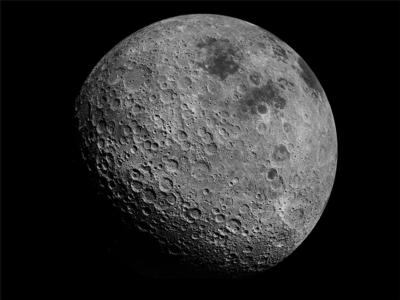
M1’s primary landing site is the moon’s Atlas Crater, located at 47.5°N, 44.4°E, on the southeastern outer edge of Mare Frigoris (“Sea of Cold”). Site selection criteria included solar-illumination duration, communication visibility from the Earth, and the surrounding area’s compatibility with the M1 mission’s technical and scientific objectives.

The primary site is backed by multiple contingency sites to which the lander may divert in the event of malfunction or the manifestation of unforeseen variables during transit. Alternative landing sites include Lacus Somniorum, Sinus Iridium, and Oceanus Procellarum. Lunar touchdown is currently expected to occur in the latter part of April 2023.

ispace founder and CEO Takeshi Hakamada states: “Our first mission will lay the groundwork for unleashing the moon’s potential and transforming it into a robust and vibrant economic system. We look forward to contributing to NASA’s Artemis program as a commercial lunar transportation service and pioneering the development of future industries and connecting the Earth to the Moon and beyond.”

FMI: www.ispace-inc.com

Advertisement

More News

ANN's Daily Aero-Term (11.29.25): Waypoint

Waypoint A predetermined geographical position used for route/instrument approach definition, progress reports, published VFR routes, visual reporting points or points for transiti>[...]

ANN's Daily Aero-Linx (11.29.25)

Aero Linx: Sentimental Journey to Cub Haven Sentimental Journey Flyin began in 1986 with a group of dedicated volunteers working to provide a sentimental return to Lock Haven, the >[...]

NTSB Prelim: Jabiru USA Sport Aircraft LLC J230-SP

The Pilot Would Often Fly Over Their House At A Low Altitude And That Family Members Would Go Outside To Wave On November 14, 2025, at 1708 eastern standard time, a Jabiru USA Spor>[...]

Classic Aero-TV: Crafting The Future of eVTOL Infrastructure

From 2024 (YouTube Edition): Volatus Infrastructure Paves The Way The name “Volatus” seems to be everywhere these days, popping up in a series of partnerships and proje>[...]

Klyde Morris (11.28.25)

Fortnite Conquers All, Klyde FMI: www.klydemorris.com>[...]

blog comments powered by Disqus



Advertisement

Advertisement

Podcasts

Advertisement

© 2007 - 2025 Web Development & Design by Pauli Systems, LC

