
Airbus A319neo Flies on Sustainable Fuel | Aero-News Network
Aero-News Network
RSS icon RSS feed
podcast icon MP3 podcast
Subscribe Aero-News e-mail Newsletter Subscribe

Airborne Unlimited -- Most Recent Daily Episodes

Episode Date

Airborne-Monday

Airborne-Tuesday

Airborne-Wednesday Airborne-Thursday

Airborne-Friday

Airborne On YouTube

Airborne-SpecialEpisode-12.15.25

AirborneNextGen-
12.16.25

Airborne-Unlimited-12.10.25

Airborne-AffordableFlyers-12.11.25

AirborneUnlimited-12.12.25

AFE 2025 LIVE MOSAIC Town Hall (Archived): www.airborne-live.net

Thu, Nov 04, 2021

Airbus A319neo Flies on Sustainable Fuel

Cooking Oil Turned Jet Fuel Coming to an Airbus Near You

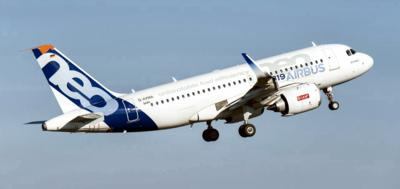
The French Ministry of Transports and Safran have announced the first in-flight evaluation of a single-aisle aircraft running on 100% unblended sustainable aviation fuel (SAF). The Testbed for the project, a single CFM LEAP-1A engine equipped on an Airbus A319neo, functioned well during its test flight over Toulouse, France. Initial results from its other ground and flight tests are expected in 2022 as the system moves towards certification. 

SAF development comes at an appropriate time, with the IATA setting a carbon reduction goal of 50% by 2050 amongst members, as well as a cap on CO2 emission increases from 2020 onwards. Sustainable AvFuel has been a target of the industry for some time, as synthesized products could not only lessen the environmental effects of fuel burn, but help certain economies dissociate from the unstable pricing of oil markets and move production onto their home turf. The SAF used in the test was the product of Total Energies, made from hydroprocessed esters and fatty acids gleaned from waste cooking oil and other fats. Produced near the testing regime in Normandy, France, the fuel will be used for compatibility and engine operability for study on Safran Helicopters’ Arrano engine. If those tests are successful, Airbus helicopters could be cleared for SAF use as well. Across the project, Total Energies has earmarked 57 tonnes of SAF for testing. 

Airbus has taken charge of characterizing and evaluating the impact of the fuel’s usage on in-flight and ground emissions. Safran will perform LEAP engine ground tests later this year, as well as ensure successful adaptation for fuel delivery subsystems. Additional projects in a similar vein are taking place under VOLCAN, the title for the new carbon alternatives working group, integrating industry partners and financing from the France Relance recovery plan. Ultimately, the study seeks to promote large-scale deployment and use of SAF, and certification of 100% SAF for commercial passenger aircraft. 

FMI: www.airbus.com

Advertisement

More News

Aero-News: Quote of the Day (12.18.25)

“These new aircraft strengthen our ability to respond quickly, train effectively and support communities nationwide. Textron Aviation has been a steadfast supporter in helpin>[...]

Classic Aero-TV: Viking Twin Otter 400--Bringing the DHC-6 Back Into Production

From 2011 (YouTube Edition): Rugged, Legendary, STOL Twin Makes A Comeback The de Havilland Twin Otter is an airplane with a long history, and it gained a reputation as a workhorse>[...]

NTSB Final Report: Rans Employee Flying Club Rans S-6ES Coyote II

A Wind Gust Lifted The Right Wing And The Airplane Turned To The Left Analysis: The pilot was departing from a 2,395-ft-long by 50-ft-wide turf runway. The pilot reported that afte>[...]

ANN FAQ: Submit a News Story!

Have A Story That NEEDS To Be Featured On Aero-News? Here’s How To Submit A Story To Our Team Some of the greatest new stories ANN has ever covered have been submitted by our>[...]

ANN's Daily Aero-Term (12.18.25): Braking Action Advisories

Braking Action Advisories When tower controllers receive runway braking action reports which include the terms “medium," “poor," or “nil," or whenever weather con>[...]

blog comments powered by Disqus



Advertisement

Advertisement

Podcasts

Advertisement

© 2007 - 2025 Web Development & Design by Pauli Systems, LC

