The Airshows And Fly-Ins Are Popping Up All Over The Place, But Are You Prepared?
Fly-ins and airshows can be a lot of fun for the recreational flyer, but they can also offer challenges if you’re not prepared. At uncontrolled airports it’s important to be ready for unusual traffic situations and the requirement to show some good pilot skills. Here are some things to think about.
Weather
Many of the fly-ins are held at airports located in Class G airspace (uncontrolled airspace). This means that takeoffs and landings are legal with as little as one-mile visibility and no minimum ceiling is specified as long as you stay clear of the clouds. It’s legal, but hardly safe in a crowd of aircraft.
On the other hand, some non-towered airports are located in Class E controlled airspace. In this case, VFR requirements are the same as for towered airport. These airports have instrument approaches, so scud running can lead to a dangerous mixing of VFR and IFR airplanes.
Traffic Patterns
Flying the proper traffic pattern provides all pilots with a certain level of predictability regarding the location of other airplanes. It is important that you are flying where other aircraft expect to see you.
Straight-in approaches are a bad idea in a heavy traffic situation. We sometimes think a straight-in approach is safe if we make lots of radio calls, but this doesn’t help the no-radio planes that can’t hear you. Extended and straight-in approaches are the most common cause of mid-air collisions on final approach.

Speeds
The more similar the pattern speeds, the better. Sure, various planes have different performance characteristics, but we can at least try to keep it close. Organizers of large fly-ins have found that a target pattern airspeed of 80 to 90 knots works well as a baseline. Adjust your speed to mix with other airplanes as best you can. Be flexible, but remember, you should always be on a normal stabilized approach as you pass through 500 feet above the ground on final.
Use The Common Traffic Advisory Frequency (CTAF) At Non-Controlled Fields
If you have a radio, use it, but keep the calls short and concise. Include altitude information and be accurate about your location. Remember, radios are not required or used by all pilots at Class E and G airports. Don’t let your radio give you a false sense of protection.
Other Things to Consider
Use all resources available. Many airports have AWOS or ASOS information available, which allows you to know the winds and have your altimeter set correctly. Use your passengers as airplane spotters. Plan your landing so you can clear the runway quickly; plan ahead for the exit taxiway.
Pilots following a slow taildragger on final should remember that they might not be able to clear the runway quickly. Always be prepared to make a go-around if the runway is not clear. Keep your cool…this is no time for “air rage.” Be very careful while taxiing in the parking area.
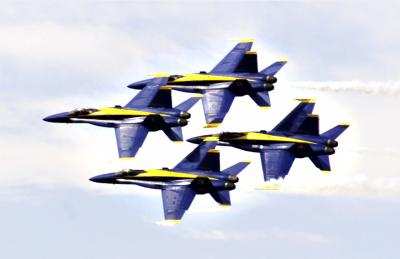
Carefully consider the safety of making fly-bys and performing formation flying at air events. “Hotshot” flying may not be safe in a high-traffic, uncontrolled, environment.
We’re ready for the excitement of a new season of fun flying. See you there!
(Images from file)



 ANN's Daily Aero-Term (12.04.25): Cooperative Surveillance


 See All