Thu, Mar 21, 2013
House Science, Space, And Technology Committee Reviews Government Efforts To Protect Earth
The House Science, Space, and Technology Committee held a hearing Tuesday titled "Threats from Space: A Review of U.S. Government Efforts to Track and Mitigate Asteroids and Meteors." The hearing is the first in a two-part series on what the U.S. is doing to track and monitor Near Earth Objects (NEO) that pose a threat to the planet. It comes one month after an asteroid passed the earth and a meteor exploded over the skies in Russia on the same day.
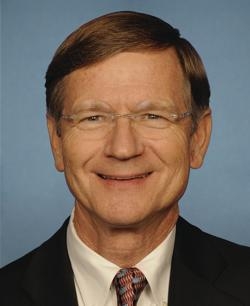
“The meteor that struck Russia was estimated to be 17 meters, and wasn’t tracked at all," said committee chair Lamar Smith (R-TX) (pictured). "The smaller they are, the harder they are to spot, and yet they can be life-threatening. Some space challenges require innovation, commitment and diligence. This is one of them.
“Examining and exploring ways to protect the Earth from asteroids and meteors is a priority for the American people and should be a priority for government. We were fortunate that the events of last month were simply an interesting coincidence rather than a catastrophe. And this Committee will strive to continue to lead in this area.”
On February 15, 2013, an unforeseen meteor exploded above Russia, releasing the equivalent of about 20 times the explosive energy of an atomic bomb. The blast injured nearly 1,200 people and resulted in an estimated $33 million in property damage. Until it entered our atmosphere, the Russian meteor went completely undetected. On the same day, a larger asteroid discovered by amateur astronomers and tracked closely by NASA passed safely by the Earth, but within the orbital belt of weather satellites.
Tuesday’s hearing provided an overview of the U.S. government’s plans and programs to track, classify and mitigate the threat of NEOs. Witnesses estimated that between 13,000 and 20,000 objects exist that are over 140 meters and considered “near Earth.” Scientists currently have knowledge of and track around 10 percent. In order to improve on these capabilities, witnesses discussed the need for better international collaboration and more space-borne telescopes to track NEOs.
A second hearing is planned for April to address international, commercial private sector and philanthropic initiatives to survey the sky for asteroids and comets.
More News
Convective SIGMET A weather advisory concerning convective weather significant to the safety of all aircraft. Convective SIGMETs are issued for tornadoes, lines of thunderstorms, e>[...]
Aero Linx: United Flying Octogenarians WELCOME to a most extraordinary group of aviators, the United Flying Octogenarians (UFO). Founded in 1982 with just a handful of pilots, we h>[...]
Pilot’s Decision To Attempt Takeoff With Frost Covering The Airplane’s Wings Analysis: The pilot of the light sport airplane was preparing to depart for a cross-country>[...]
“We’ve paid for the cable line’s repair for the customer and have apologized for the inconvenience this caused them...” Source: Some followup info from an A>[...]
Coupled Approach An instrument approach performed by the aircraft autopilot, and/or visually depicted on the flight director, which is receiving position information and/or steerin>[...]



 ANN's Daily Aero-Term (12.01.25): Convective SIGMET


 See All