Wed, Jul 04, 2012
Airplane 'Flew Like A Usual A-10 Would'
On June 28, the 40th Flight Test Squadron flew the first aircraft to use a new fuel blend derived from alcohol at Eglin Air Force Base in Florida. "The A-10 is the first aircraft ever to fly on this fuel," said Jeff Braun, Chief for the Air Force Alternative Fuel Certification Division, at Wright-Patterson Air Force Base, Ohio. "It flew like a usual A-10 would without any issues," said Maj. Olivia Elliott, an A-10 pilot and an evaluator for the mission.
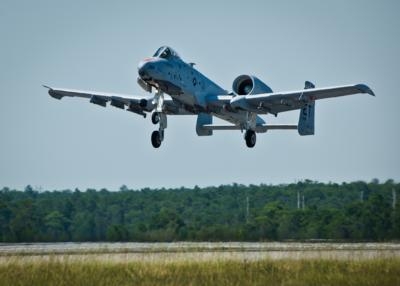
The fuel, known as ATJ (Alcohol-to-Jet) is the third alternative fuel to be evaluated by the Air Force for fleet-wide use as a replacement for standard petroleum-derived JP-8 aviation fuel. Before ATJ, other alternative fuels included a synthetic paraffinic kerosene derived from coal and natural gas and a bio-mass fuel derived from plant-oils and animal fats known as Hydroprocessed Renewable Jet.
ATJ is a cellulousic-based fuel. It can be derived using wood, paper, grass, anything that is a cell-based material. The sugars extracted from these materials are fermented into alcohols, which are then hydro-processed into the aviation-grade kerosenes used for aviation fuel.
The Fischer-Tropsch SPK blend has been fully certified by the Air Force for operational use throughout the Air Force. All testing of the bio-mass HRJ has been completed and formal coordination is underway to certify it as an approved fuel agent. Like ATJ, the bio-mass fuel was first tested by 40th FLTS in 2010, using the same A-10 test platform.
"The A-10 is an excellent platform for testing the new fuel due in part to its segregated fuel system," said Capt. Joseph Rojas, A-10 test engineer. "The system allows one engine to run off a fuel supply that is completely segregated from the other engine. This allows us to fly with one engine on the new fuel and the other on traditional fuel. If engine operation is normal, as with the ATJ blend, then we progress to flying with both engines on the new fuel."
The A-10 ATJ fuel test went through similar ground and flight tests, using a mixture of the alternative fuel and the standard Air Force JP-8. Ground-based testing included monitoring engine performance and ensuring all data correlated favorably to both the technical requirements and JP-8 fuel specification. Flight tests included analyzing aircraft performance during controlled accelerations and climbs and operational maneuvering.
The Air Force has recently approved fleet-wide certification efforts of the ATJ fuel blend. Once the AFCD completes all air and ground testing, the ATJ will be approved as an official alternative fuel source for Air Force use. "Eventually, it is possible that aircraft will see JP-8 consisting of all these alternatives," said Braun. "You won't be able to determine the difference and you won't care, because all perform as JP-8."
(Photo courtesy USAF)
More News
The Airplane Made An Uncommanded Right Yaw And Roll, And He Was Unable To Maintain Control Of The Airplane On November 11, 2025, about 1750 central standard time, a Cirrus SR20, N8>[...]
Aero Linx: Florida Antique Biplane Association "Biplanes.....outrageous fun since 1903." That quote really defines what the Florida Antique Biplane Association (FABA) is all about.>[...]
Wind Shear Escape An unplanned abortive maneuver initiated by the pilot in command (PIC) as a result of onboard cockpit systems. Wind shear escapes are characterized by maximum thr>[...]
“Working closely with the Polish Armed Forces, we’re focused on disciplined execution to help enhance Poland’s defense capabilities and keep up with the strong de>[...]
Also: Bell 505 on SAF, NYPA Gets Flak For BizAv 'Abuse', FAA Venezuela Caution, Horizon Update Textron Aviation has confirmed it will be ending production of the Beechcraft Bonanza>[...]



 NTSB Prelim: Cirrus Design Corp SR20


 See All