
Indian Spacecraft Safely Returns To Earth | Aero-News Network
Aero-News Network
RSS icon RSS feed
podcast icon MP3 podcast
Subscribe Aero-News e-mail Newsletter Subscribe

Airborne Unlimited -- Most Recent Daily Episodes

Episode Date

Airborne-Monday

Airborne-Tuesday

Airborne-Wednesday Airborne-Thursday

Airborne-Friday

Airborne On YouTube

Airborne-SpecialEpisode-12.15.25

AirborneNextGen-
12.16.25

Airborne-Unlimited-12.10.25

Airborne-AffordableFlyers-12.11.25

AirborneUnlimited-12.12.25

AFE 2025 LIVE MOSAIC Town Hall (Archived): www.airborne-live.net

Tue, Jan 23, 2007

Indian Spacecraft Safely Returns To Earth

Major Milestone For Country's Manned Space Program

India's Space Research Organization (ISRO) announced Monday it has safely deorbited and recovered a capsule launched on January 10 from a facility north of the city of Chennai. The capsule was one of four payloads aboard the rocket and was part of an effort by the country to develop a manned spaceflight program.

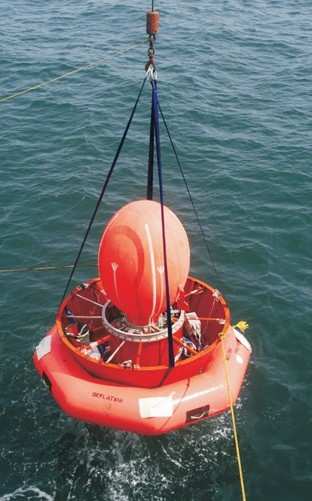
The 1,210 pound Space Capsule Recovery Experiment (SRE) spent 11 days in orbit before splashing down in the Bay of Bengal yesterday. (The above picture was taken during capsule recovery testing -- it's not from the actual SRE recovery).

A. Subramoniam, head of the team that designed and built the capsule at ISRO, told the Sydney Morning Herald, "[It] landed in the Bay of Bengal ... as per schedule. The mission is a great success [and] a stepping stone to design and build our very own reusable spacecraft, and eventually [carry out] manned missions into space, too."

India's space agency has built and orbited communications and remote-sensing satellites for years, but this mission marks a first attempt at deploying a reusable spacecraft.

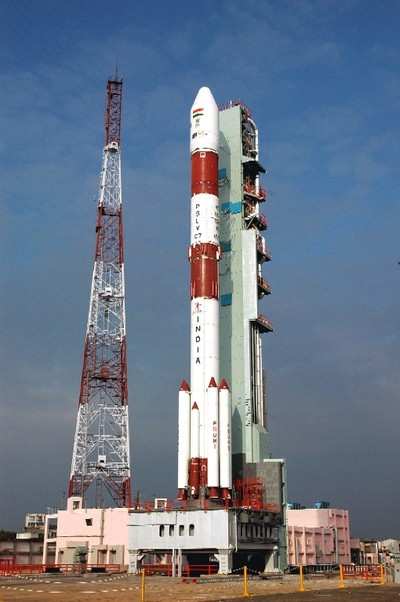
India's home-grown Polar Satellite Launch Vehicle -- dubbed PSLV-C7 -- carried the capsule aloft along with an Indian mapping satellite, an Indonesian earth observation satellite and an Argentinian educational satellite. The four objects were lifted to a 395-mile polar orbit.

PSLV is ISRO's workhorse launch vehicle. It's a four-stage rocket using a combination of solid and liquid propellants with a total lift-off weight of nearly 300 tons. The agency boasts eight consecutive successful launches with the booster since it started service in 1994.

The SRE, whose primary mission was to aid India in developing re-entry procedures and recoverable/reusable space technologies, also carried two microgravity experiments into space and back to earth.

Although ISRO officials say the country won't likely put an astronaut in space before 2014, it says Monday's success will help the country in its preparations for a 2008 unmanned moon mission.

FMI: www.isro.org

Advertisement

More News

ANN's Daily Aero-Term (12.19.25): Ultrahigh Frequency (UHF)

Ultrahigh Frequency (UHF) The frequency band between 300 and 3,000 MHz. The bank of radio frequencies used for military air/ground voice communications. In some instances this may >[...]

NTSB Prelim: Cirrus Design Corp SR22T

During The 7 Second Descent, There Was Another TAWS Alert At Which Time The Engine Remained At Full Power On October 24, 2025 at 2115 mountain daylight time, a Cirrus SR22T, N740TS>[...]

Classic Aero-TV: The Red Tail Project--Carrying the Torch of the Tuskegee Airmen

From 2009 (YouTube Edition): Educational Organization Aims to Inspire by Sharing Tuskegee Story Founding leader Don Hinz summarized the Red Tail Project’s mission in simple, >[...]

Aero-News: Quote of the Day (12.19.25)

“This feels like an important step since space travel for people with disabilities is still in its very early days... I’m so thankful and hope it inspires a change in m>[...]

Airborne 12.17.25: Skydiver Hooks Tail, Cooper Rotax Mount, NTSB v NDAA

Also: New Katanas, Kern County FD Training, IndiGo’s Botched Roster, MGen. Leavitt Named ERAU Dean The Australian Transportation Safety Bureau (ATSB) has wrapped up its inves>[...]

blog comments powered by Disqus



Advertisement

Advertisement

Podcasts

Advertisement

© 2007 - 2025 Web Development & Design by Pauli Systems, LC

