
Disappointing: NASA Delays Man’s Return to the Moon to At Least 2027 | Aero-News Network
Aero-News Network
RSS icon RSS feed
podcast icon MP3 podcast
Subscribe Aero-News e-mail Newsletter Subscribe

Airborne Unlimited -- Most Recent Daily Episodes

Episode Date

Airborne-Monday

Airborne-Tuesday

Airborne-Wednesday Airborne-Thursday

Airborne-Friday

Airborne On YouTube

Airborne-Unlimited-12.08.25

AirborneNextGen-
12.09.25

Airborne-Unlimited-12.10.25

Airborne-FltTraining-12.04.25

AirborneUnlimited-12.05.25

AFE 2025 LIVE MOSAIC Town Hall (Archived): www.airborne-live.net

Mon, Dec 09, 2024

Disappointing: NASA Delays Man’s Return to the Moon to At Least 2027

Artemis Mission Stalled to Allow Further Testing on Orion Capsule

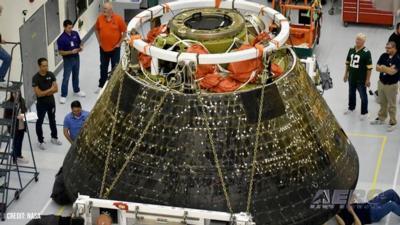
NASA has delayed the Artemis II and Artemis III missions, which were expected to return astronauts to the moon for the first time since 1972, until 2026 and 2027. The decision was made to allow engineers to continue testing on the Orion crew capsule.

The last manned mission to the moon was NASA’s Apollo 17, which took place on December 19, 1972. This was the 9th and final Apollo crewed moon exploration mission.

The agency’s Artemis II mission aims to send astronauts on a 10-day trip to circumnavigate, but not land on, the moon. Artemis III will follow, marking astronaut’s return to the moon’s surface in over 50 years.

The two expeditions were originally planned for November 2024 and November 2025, but were pushed back to September 2025 and September 2026 in January. NASA explained that this was because of concerns with the batteries, air ventilation, and temperature controls on the Orion spacecraft. The program has also been generally controversial due to its relatively high costs and ambition.

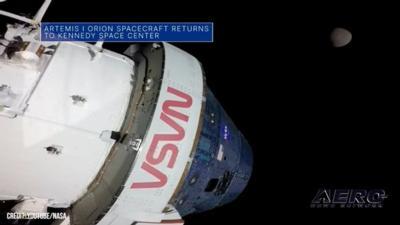
The timing of these missions was questioned again after Artemis I returned with damage to the heat shield. Artemis I was a two-day uncrewed expedition from NASA’s Kennedy Space Center in November 2022. During the spacecraft’s reentry, its heat shield “experienced an unexpected loss of charred material,” NASA explained.

Since then, agency engineers and another independent team have spent months conducting tests to determine the cause of the heat shield’s excessive wear. The investigation found that the heat shield would have been capable of keeping a crew safe, but that there should be “changes to Orion’s trajectory as it enters Earth’s atmosphere and slows from nearly 25,000 mph to about 325 mph before its parachutes unfurl for safe splashdown in the Pacific Ocean.”

“The Artemis campaign is the most daring, technically challenging, collaborative, international endeavor humanity has ever set out to do,” expressed NASA Administrator Bill Nelson. "We need to get this next test flight right. That’s how the Artemis campaign succeeds.”

FMI: www.nasa.gov

Advertisement

More News

Aero-News: Quote of the Day (12.07.25)

“This vote sends an undeniable message to Air Transat management: We are unified, resolute, and have earned a contract that reflects today’s industry standards, not the>[...]

ANN's Daily Aero-Linx (12.07.25)

Aero Linx: Beech Aero Club The Beech Aero Club (BAC) is the international type club for owners and pilots of the Beech Musketeer aircraft and its derivatives, the Sport, Super, Sun>[...]

NTSB Final Report: Lafferty Jack Sea Rey

While Landing In The River, The Extended Landing Gear Contacted The Water And The Airplane Nosed Over, Resulting In Substantial Damage Analysis: The pilot of the amphibious airplan>[...]

Classic Aero-TV: The B29 SuperFortress ‘Doc’ - History in Flight

From 2022 (YouTube Edition): Carrying the Legacy of The B-29 For Generations to Come We had a chance to chat with the Executive Director of B-29 Doc, Josh Wells, during their stop >[...]

Airborne 12.08.25: Samaritan’s Purse Hijack, FAA Med Relief, China Rocket Fail

Also: Cosmonaut Kicked Out, Airbus Scales Back, AF Silver Star, Russian A-60 Clobbered A Samaritan’s Purse humanitarian flight was hijacked on Tuesday, December 2, while atte>[...]

blog comments powered by Disqus



Advertisement

Advertisement

Podcasts

Advertisement

© 2007 - 2025 Web Development & Design by Pauli Systems, LC

