
Europe Moves Ahead On Galileo Sat-Nav System | Aero-News Network
Aero-News Network
RSS icon RSS feed
podcast icon MP3 podcast
Subscribe Aero-News e-mail Newsletter Subscribe

Airborne Unlimited -- Most Recent Daily Episodes

Episode Date

Airborne-Monday

Airborne-Tuesday

Airborne-Wednesday Airborne-Thursday

Airborne-Friday

Airborne On YouTube

Airborne-Unlimited-12.08.25

AirborneNextGen-
12.09.25

Airborne-Unlimited-12.10.25

Airborne-AffordableFlyers-12.11.25

AirborneUnlimited-12.12.25

AFE 2025 LIVE MOSAIC Town Hall (Archived): www.airborne-live.net

Mon, Dec 13, 2004

Europe Moves Ahead On Galileo Sat-Nav System

Operations To Begin In 2008

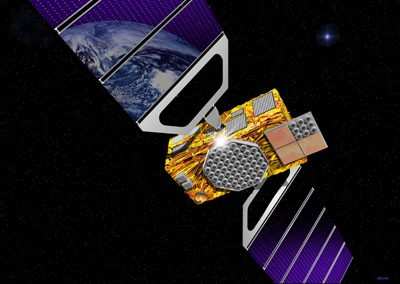
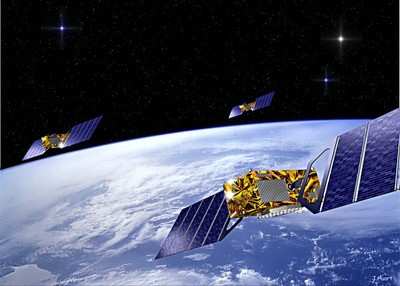
No longer a competitor to the US GPS system, but a partner, the EU's Galileo GPS constellation is a step closer to reality, now that European transport ministers have given their okay on the project.

"This is a real technological revolution," said the European Commissioner for Transport, Jacques Barrot, in an interview with the BBC. "This will have many practical applications: direct information for emergency rescuers in case of car accidents, dynamic traffic management to help trucks avoid huge traffic jams, the prevention of natural

catastrophes such as flooding or fires, and a lot of other useful applications."

The ministers Friday approved the deployment phase of the project, meaning work can commence on the construction and launch of Galileo's 30-spaceship constellation. The cost is projected at well over $2 billion, money that is expected to be recovered by fees charged to the private sector.

This program will offer Europe a worldwide position with countries such as China and Russia using the system Galileo," said Barrot. "We estimate the creation of 150,000 jobs and a serial of industrial and technological developments."

Initially, the Pentagon wasn't at all happy with the idea of a competing GPS system, one that might interfere with its own signals and one that would prevent Washington from intentionally degrading the signals in time of war. But the US and the EU came to terms back in June, adopting compatible operating standards and allowing both to jam each others' in small areas signals during an armed conflict.

But for civilians, the benefits are huge. The advent of Galileo will vastly increase the size of the GPS constellation, allowing for better accuracy and interoperability between makers of GPS equipment on both sides of the pond.

While the first demonstration vehicle is set for launch next year, the Galileo constellation will begin taking orbit in 2008.

FMI: EU Guide To Galileo

Advertisement

More News

Aero-News: Quote of the Day (12.09.25)

“We respectfully call on the City of Mesa to: 1. Withdraw the landing fee proposal immediately 2. Engage with the aviation community before making decisions that impact safet>[...]

ANN's Daily Aero-Term (12.09.25): High Speed Taxiway

High Speed Taxiway A long radius taxiway designed and provided with lighting or marking to define the path of aircraft, traveling at high speed (up to 60 knots), from the runway ce>[...]

ANN's Daily Aero-Linx (12.09.25)

Aero Linx: International Federation of Airworthiness (IFA) IFA uniquely combines together all those with responsibility for policies, principles and practices concerned with the co>[...]

NTSB Final Report: Diamond Aircraft Ind Inc DA20C1 (A1); Robinson Helicopter R44

Controller’s Expectation That VW02 Would Have Departed Sooner Led To An Inadequate Scan And Loss Of Situational Awareness Analysis: A Robinson R-44 helicopter N744AF, VW02 (V>[...]

ANN FAQ: Q&A 101

A Few Questions AND Answers To Help You Get MORE Out of ANN! 1) I forgot my password. How do I find it? 1) Easy... click here and give us your e-mail address--we'll send it to you >[...]

blog comments powered by Disqus



Advertisement

Advertisement

Podcasts

Advertisement

© 2007 - 2025 Web Development & Design by Pauli Systems, LC

