Wed, Apr 24, 2013
'PhoneSats' May Be The Lowest-Cost Satellites Ever Placed In Orbit
Three smartphones destined to become low-cost satellites rode to space Sunday aboard the maiden flight of Orbital Science Corp.'s Antares rocket from NASA's Wallops Island Flight Facility in Virginia. The trio of "PhoneSats" is operating in orbit, and may prove to be the lowest-cost satellites ever flown in space. The goal of NASA's PhoneSat mission is to determine whether a consumer-grade smartphone can be used as the main flight avionics of a capable, yet very inexpensive, satellite.
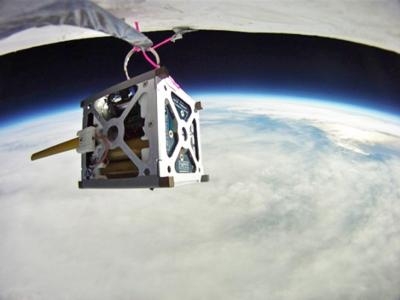
Transmissions from all three PhoneSats have been received at multiple ground stations on Earth, indicating they are operating normally. The PhoneSat team at the Ames Research Center in Moffett Field, CA, will continue to monitor the satellites in the coming days. The satellites are expected to remain in orbit for as long as two weeks.
"It's always great to see a space technology mission make it to orbit -- the high frontier is the ultimate testing ground for new and innovative space technologies of the future," said Michael Gazarik, NASA's associate administrator for space technology in Washington.
"Smartphones offer a wealth of potential capabilities for flying small, low-cost, powerful satellites for atmospheric or Earth science, communications, or other space-born applications. They also may open space to a whole new generation of commercial, academic and citizen-space users."
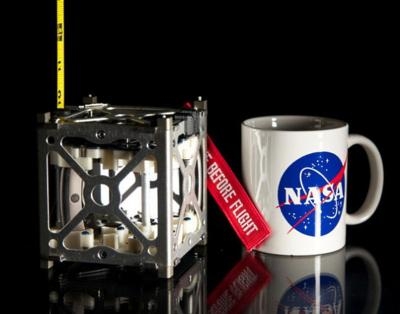
Satellites consisting mainly of the smartphones will send information about their health via radio back to Earth in an effort to demonstrate they can work as satellites in space. The spacecraft also will attempt to take pictures of Earth using their cameras. Amateur radio operators around the world can participate in the mission by monitoring transmissions and retrieving image data from the three satellites. Large images will be transmitted in small chunks and will be reconstructed through a distributed ground station network.
(Images provided by NASA. Top image taken during high-altitude balloon testing.)
More News
From 2023 (YouTube Edition): "Ain’t Your Daddy’s Super Cub”—Don Wade Co-owned by Don and Ron Wade—the former of Don’s Dream Machines, a storied >[...]
Pilot-Rated Passenger Reported That The Pilot Did Not Adequately “Round Out” The Landing Flare And The Airplane Bounced And Yawed To The Right Analysis: The pilot state>[...]
Dead Reckoning Dead reckoning, as applied to flying, is the navigation of an airplane solely by means of computations based on airspeed, course, heading, wind direction, and speed,>[...]
Aero Linx: Lake Amphibian Club This website is created and sponsored by the Lake Amphibian Club, to help spread the word about these wonderful, versatile amphibians that can land j>[...]
“I am deeply honored to be sworn in as NASA administrator. NASA’s mission is as imperative and urgent as ever — to push the boundaries of human exploration, ignit>[...]



 Classic Aero-TV: In Praise of Alabamas Patriot Aircraft USA


 See All