
VA Spaceport Launches First Rocket | Aero-News Network
Aero-News Network
RSS icon RSS feed
podcast icon MP3 podcast
Subscribe Aero-News e-mail Newsletter Subscribe

Airborne Unlimited -- Most Recent Daily Episodes

Episode Date

Airborne-Monday

Airborne-Tuesday

Airborne-Wednesday Airborne-Thursday

Airborne-Friday

Airborne On YouTube

Airborne-SpecialEpisode-12.15.25

AirborneNextGen-
12.16.25

Airborne-Unlimited-12.10.25

Airborne-AffordableFlyers-12.11.25

AirborneUnlimited-12.12.25

AFE 2025 LIVE MOSAIC Town Hall (Archived): www.airborne-live.net

Sun, Dec 17, 2006

VA Spaceport Launches First Rocket

Minotaur I Boosts Experimental Satellites Aloft

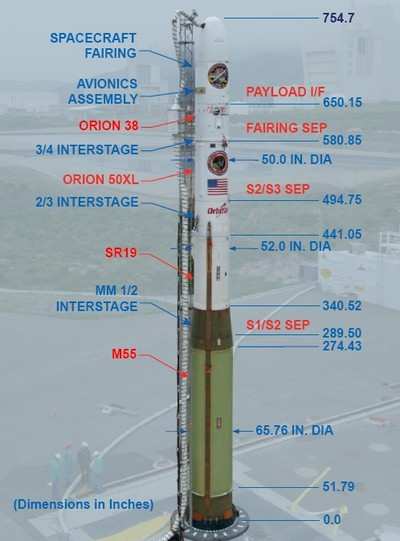
An Orbital Sciences Corporation Minotaur I rocket launched from Virginia's Mid-Atlantic Regional Spaceport 07:00 EST on Saturday morning. Aboard was a USAF TacSat-2 satellite and a NASA GeneSat-1.

TacSat-2 will help the military quickly transmit digital imagery among commanders. GeneSat-1 carries a harmless strain of E. coli bacteria as part of an experiment to study the long-term effects of spaceflight on living organisms.

Mission director USAF Colonel Samuel McCraw told the Associated Press, "We can now confirm that both satellites are alive and kicking. It's still too early to know how they're doing, but both have woken up and started talking."

Virginia's Commercial Space Flight Authority built the spaceport on land leased from NASA's Wallops Flight Facility on the Virginia coast in 1998. Saturday's launch was the facility's first.

Spaceport directory Billie Reed said, "It's been a lot of work, it's been a long road, but today we showed we can do it. We're in business for real."

The Minotaur I is built from decommissioned Minuteman ICBMs and two stages from Pegasus rockets.

A software glitch caused a week-long delay for the launch originally planned for last Monday. The problem might have prevented solar panels on the TacSat-2 satellite from properly orienting to the sun resulting in a rapid depletion of its on-board batteries.

Colonel McGraw told the Associated Press the delays added "a couple hundred thousand dollars" to the already considerable mission costs -- estimated to be $60 million.

The next time you think a $10 landing fee is pretty steep at your local regional airport remember this: $621,000 of that $60 million mission cost went to the Mid-Atlantic Regional Spaceport!

FMI: www.orbital.com, www.vaspace.org

Advertisement

More News

ANN's Daily Aero-Term (12.14.25): Local Airport Advisory (LAA)

Local Airport Advisory (LAA) A service available only in Alaska and provided by facilities that are located on the landing airport, have a discrete ground-to-air communication freq>[...]

Airborne 12.08.25: Samaritan’s Purse Hijack, FAA Med Relief, China Rocket Fail

Also: Cosmonaut Kicked Out, Airbus Scales Back, AF Silver Star, Russian A-60 Clobbered A Samaritan’s Purse humanitarian flight was hijacked on Tuesday, December 2, while atte>[...]

ANN's Daily Aero-Linx (12.15.25)

Aero Linx: Michigan Helicopter Association (MHA) The Michigan Helicopter Association (MHA) exists to bring together people who share an interest in helicopters, including private, >[...]

Airborne 12.10.25: New Gulfstream, ATC Integrator, Outrageous FFZ User Fees

Also: Airbus Acquisition, USCG Helo Sniper, Remember Pearl Harbor, New Thunderbird 1 Gulfstream’s newest addition to its next-gen lineup, the super-midsize G300, is officiall>[...]

Airborne-NextGen 12.09.25: Amazon Crash, China Rocket Accident, UAV Black Hawk

Also: Electra Goes Military, Miami Air Taxi, Hypersonics Lab, MagniX HeliStrom Amazon’s Prime Air drones are back in the spotlight after one of its newest MK30 delivery drone>[...]

blog comments powered by Disqus



Advertisement

Advertisement

Podcasts

Advertisement

© 2007 - 2025 Web Development & Design by Pauli Systems, LC

