
NTSB Releases Final Report on April 2022 Glider Accident | Aero-News Network
Aero-News Network
RSS icon RSS feed
podcast icon MP3 podcast
Subscribe Aero-News e-mail Newsletter Subscribe

Airborne Unlimited -- Most Recent Daily Episodes

Episode Date

Airborne-Monday

Airborne-Tuesday

Airborne-Wednesday Airborne-Thursday

Airborne-Friday

Airborne On YouTube

Airborne-Unlimited-12.08.25

AirborneNextGen-
12.09.25

Airborne-Unlimited-12.10.25

Airborne-FltTraining-12.04.25

AirborneUnlimited-12.05.25

AFE 2025 LIVE MOSAIC Town Hall (Archived): www.airborne-live.net

Wed, Oct 11, 2023

NTSB Releases Final Report on April 2022 Glider Accident

Devil Complacency

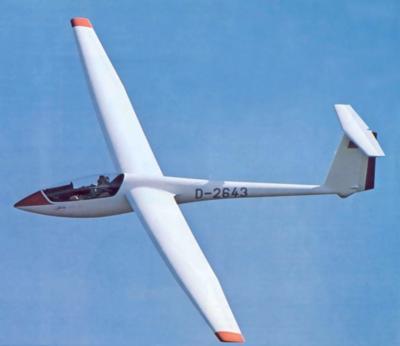
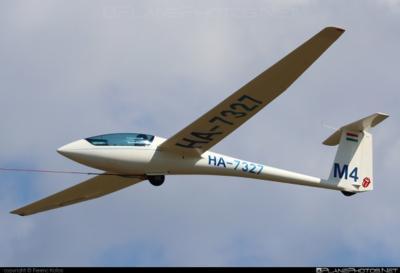
The NTSB has released its final report on a 16 April 2022 accident in which a Schleicher ASW-19B glider was substantially damaged and its Private Pilot rated operator (and sole occupant) was fatally injured shortly after departing Jacksonville, Florida’s Herlong Recreational Airport (HEG).

The accident-aircraft was operated as a personal flight under Part 91 of the Federal Aviation Regulations.

In its report, the NTSB set forth:

“Shortly after the tow airplane and the glider became airborne, the pilot of the glider released from the tow plane about two-hundred-feet above ground level, then entered a left turn back toward the runway, during which the glider impacted terrain. Witnesses to the accident described the glider’s takeoff as “abnormal” and “erratic” and reported that the glider climbed above the tow plane twice before the glider pilot released from tow.

“Post-accident examination of the glider revealed that the elevator control was not connected as required by preflight assembly procedures, which would have resulted in the pilot’s inability to control the glider’s pitch attitude. According to the tow pilot, the glider pilot had assembled the glider by himself—as he had done many times before—on the morning of the accident. It is likely that the pilot, had he completed a positive control check after assembling the aircraft, would have identified the disconnected elevator control.

“Toxicology testing identified two sedating drugs, cetirizine (Zyrtec) and trazodone (an antidepressant), in the pilot’s cavity blood and urine; however, the pilot’s use of these medications most likely did not contribute to the accident.”

The NTSB determined the accident had likely been caused by the pilot’s improper preflight assembly of the glider’s elevator control, which occasioned a loss of pitch control on takeoff. The Board ascribed the accident, also, to the pilot’s failure to complete a preflight positive control check, which would have identified the disconnected elevator control.

FMI: www.ntsb.gov

Advertisement

More News

ANN's Daily Aero-Term (12.08.25): Decision Altitude (DA)

Decision Altitude (DA) A specified altitude (mean sea level (MSL)) on an instrument approach procedure (ILS, GLS, vertically guided RNAV) at which the pilot must decide whether to >[...]

ANN's Daily Aero-Linx (12.08.25)

Aero Linx: T-34 Association, Inc. The T-34 Association was formed in July 1975 so that individuals purchasing then military surplus T-34As had an organization which would provide s>[...]

NTSB Final Report: Piper PA-31T3

As He Released The Brakes To Begin Taxiing, The Brake Pedals Went To The Floor With No Braking Action Analysis: The pilot reported that during engine start up, he applied the brake>[...]

Aero-News: Quote of the Day (12.08.25)

“Legislation like the Mental Health in Aviation Act is still imperative to hold the FAA accountable for the changes they clearly acknowledge need to be made... We cannot wait>[...]

Airborne-Flight Training 12.04.25: Ldg Fee Danger, Av Mental Health, PC-7 MKX

Also: IAE Acquires Diamond Trainers, Army Drones, FedEx Pilots Warning, DA62 MPP To Dresden Tech Uni The danger to the flight training industry and our future pilots is clear. Dona>[...]

blog comments powered by Disqus



Advertisement

Advertisement

Podcasts

Advertisement

© 2007 - 2025 Web Development & Design by Pauli Systems, LC

