Thu, May 24, 2012
Fifteen Experiments Focusing On Physical, Chemical, And Biological Systems
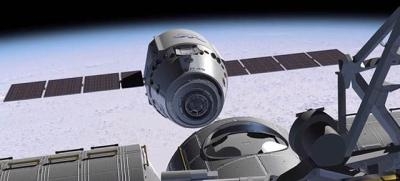
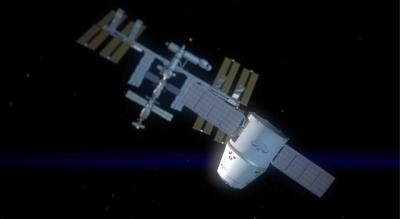
The SpaceX Dragon capsule, which on Tuesday became the first commercially developed and built spacecraft to launch to the International Space Station, is carrying among its cargo a suite of 15 science experiments designed by students.
Known collectively as Aquarius, the experiments will assess the effects of microgravity on physical, chemical and biological systems. The students have been immersed in every facet of research, from definition of the investigation to experiment design, proposal writing and a formal NASA proposal review for selection of flight experiments. "This unique student activity adds a new dimension to the International Space Station and its role as America's only orbiting national laboratory," said Leland Melvin, NASA's associate administrator for Education. "It also clearly demonstrates that students still can actively participate in NASA microgravity opportunities in the post-shuttle era."
Aquarius is sponsored by the Student Space Flight Experiments Program (SSEP), which is a cooperative venture by the National Center for Earth and Space Science Education (NCESSE) and NanoRacks LLC, a national science, technology, engineering and mathematics (STEM) education initiative. The organizations work together to give 300 to 1,000 students across a community the opportunity to design and propose microgravity experiments to fly in low Earth orbit.
The first two SSEP payloads flew in 2011 aboard space shuttles Endeavour and Atlantis on the STS-134 and STS-135 missions respectively. This third round of experiments will be the first to be conducted in orbit by space station astronauts. The announcement of opportunity for Aquarius was released in July 2011. It elicited responses from 12 communities in nine states and the District of Columbia. A total of 779 student teams, with 41,200 members ranging from fifth graders to community college, submitted proposals. After a formal two-step review process in fall 2011, the final 15 flight experiments were selected. They all passed a formal NASA flight safety review, clearing the final hurdle on their journey to launch.
This is one of many programs that use NASA's science and exploration missions to encourage students to pursue a STEM-centric school curriculum. Building a robust cadre of scientists and engineers for the future is a high priority for NASA's Office of Education. (Images provided by SpaceX)
More News
From 2023 (YouTube Edition): "Ain’t Your Daddy’s Super Cub”—Don Wade Co-owned by Don and Ron Wade—the former of Don’s Dream Machines, a storied >[...]
Pilot-Rated Passenger Reported That The Pilot Did Not Adequately “Round Out” The Landing Flare And The Airplane Bounced And Yawed To The Right Analysis: The pilot state>[...]
Dead Reckoning Dead reckoning, as applied to flying, is the navigation of an airplane solely by means of computations based on airspeed, course, heading, wind direction, and speed,>[...]
Aero Linx: Lake Amphibian Club This website is created and sponsored by the Lake Amphibian Club, to help spread the word about these wonderful, versatile amphibians that can land j>[...]
“I am deeply honored to be sworn in as NASA administrator. NASA’s mission is as imperative and urgent as ever — to push the boundaries of human exploration, ignit>[...]



 Classic Aero-TV: In Praise of Alabamas Patriot Aircraft USA


 See All