
Boeing’s Second ABS All-Electric Propulsion Satellite Enters Service | Aero-News Network
Aero-News Network
RSS icon RSS feed
podcast icon MP3 podcast
Subscribe Aero-News e-mail Newsletter Subscribe

Airborne Unlimited -- Most Recent Daily Episodes

Episode Date

Airborne-Monday

Airborne-Tuesday

Airborne-Wednesday Airborne-Thursday

Airborne-Friday

Airborne On YouTube

Airborne-Unlimited-11.24.25

AirborneNextGen-
11.18.25

Airborne-Unlimited-11.19.25

Airborne-AffordableFlyers-11.20.25

AirborneUnlimited-11.21.25

LIVE MOSAIC Town Hall (Archived): www.airborne-live.net

Mon, Jan 30, 2017

Boeing’s Second ABS All-Electric Propulsion Satellite Enters Service

ABS-2A Will Deliver In-Home Communications Services Across Areas Of Asia, Africa And Russia

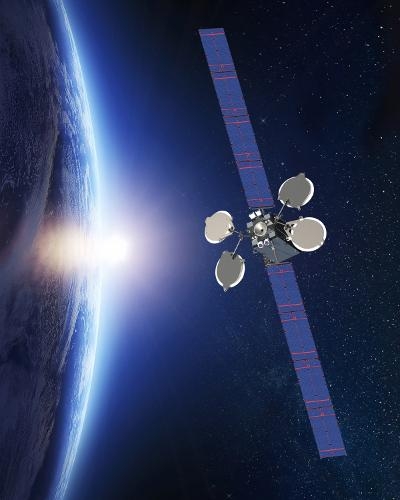
A Boeing satellite built for ABS entered into commercial service, providing enhanced satellite services including direct-to-home television services on Jan. 21 to customers in Africa, the Middle East and North Africa, Russia, South Asia and South East Asia.

This satellite, ABS-2A, joins ABS-3A as Boeing’s second all-electric propulsion 702 satellite for ABS. Boeing is the first satellite manufacturer to build and deliver all-electric propulsion satellites.

“We have completed our three-satellite build investment in launching three satellites in three consecutive years, including ABS-2 in 2014 as well as Boeing’s ABS-3A in 2015 and ABS-2A in 2016,” said Tom Choi, CEO of ABS. “ABS-2A is the latest high-capacity satellite providing expansion and continuity of satellite services at ABS’ prime gateway over the Indian Ocean region. It is located with ABS-2 at our premium neighborhood at 75°E optimized for video services for growing television community access and direct-to-home businesses.”

All-electric satellites can be launched as pairs, as ABS-2A was in June 2016. This improves efficiency and affordability for the customer.

“This latest delivery reaffirms our leadership with all-electric propulsion,” said Mark Spiwak, president, Boeing Satellite Systems International. “Our ability to stack and join the satellites using our patented design enables our customers to minimize the costs associated with launching a single satellite.”

(Image provided with Boeing news release)

FMI: www.boeing.com

Advertisement

More News

Classic Aero-TV: Extra; the Airplane, the Man, and His Grand DeLand Plan

From 2023 (YouTube Edition): Germany’s Best by Way of Florida Established in 1980 by German aerobatic pilot Walter Extra as a means by which to design and develop his own air>[...]

ANN FAQ: Follow Us On Instagram!

Get The Latest in Aviation News NOW on Instagram Are you on Instagram yet? It's been around for a few years, quietly picking up traction mostly thanks to everybody's new obsession >[...]

Aero-News: Quote of the Day (11.27.25)

“Achieving PMA for the S-1200 Series magnetos is another step in expanding our commitment to providing the aviation community with the most trusted and durable ‘firewal>[...]

ANN's Daily Aero-Term (11.27.25): Ultralight Vehicle

Ultralight Vehicle A single-occupant aeronautical vehicle operated for sport or recreational purposes which does not require FAA registration, an airworthiness certificate, or pilo>[...]

ANN's Daily Aero-Linx (11.27.25)

Aero Linx: The de Havilland Moth Club Ltd The de Havilland Moth Club evolved from a belief that an association of owners and operators of Moth aeroplanes should be formed to create>[...]

blog comments powered by Disqus



Advertisement

Advertisement

Podcasts

Advertisement

© 2007 - 2025 Web Development & Design by Pauli Systems, LC

