
US Pilots Admit To Same Oversight That Led To Spanair Accident | Aero-News Network
Aero-News Network
RSS icon RSS feed
podcast icon MP3 podcast
Subscribe Aero-News e-mail Newsletter Subscribe

Airborne Unlimited -- Most Recent Daily Episodes

Episode Date

Airborne-Monday

Airborne-Tuesday

Airborne-Wednesday Airborne-Thursday

Airborne-Friday

Airborne On YouTube

Airborne-Unlimited-12.22.25

AirborneNextGen-
12.23.25

Airborne-Unlimited-12.10.25

Airborne-FltTraining-12.18.25

AirborneUnlimited-12.19.25

AFE 2025 LIVE MOSAIC Town Hall (Archived): www.airborne-live.net

Fri, Oct 24, 2008

US Pilots Admit To Same Oversight That Led To Spanair Accident

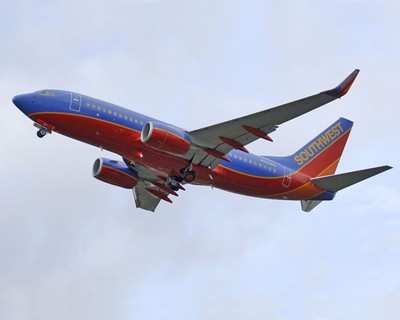
ASRS Data Indicates Improper Takeoff Flap Settings Reported 55 Times Since 2000

(A previous version of this story incorrectly attributed the source of the data used in the USA Today study to the National Aviation Operations Monitoring Service, or NAOMS. ANN regrets the error -- Ed.)

The August 20 downing of a Spanair MD-82 on takeoff has cast the spotlight on a relatively mundane task for most pilots: setting proper flap positions.

And based on figures cited by USA Today... that may be a good thing. The national news journal says US pilots reported 55 incidents of improper flap and slat settings on takeoff to NASA's Aviation Safety Reporting System (ASRS) since 2000.

"This represents a disturbing trend," says Flight Safety Foundation president Bill Voss. "There are obvious human errors that are being made that take away ... layers of safety."

According to ASRS responses, most reported cases of improper takeoff settings were caught by visual and aural cockpit warning systems, and corrected before the aircraft took off. Investigators into the Spanair crash -- which killed 154 people -- say those warning systems were inoperative onboard the accident aircraft.

Proper takeoff settings for flaps (and on larger aircraft, leading edge slats) are vital for all aircraft, especially for larger business jets and airliners. Both devices expand the available lifting surface of an airplane's wing, providing additional lift during the critical moments when the aircraft must climb out of ground effect, and establish a safe climb attitude at relatively slow airspeeds.

The ASRS study lists an 2005 incident at Washington Reagan National Airport, in which the airliner took off without the devices deployed. According to the pilots' account of the incident, the airliner nearly plunged to the ground. Another flight crew reported to ASRS they erred in failing to set flaps and slats during their October 2006 takeoff from Orlando.

"Event could have been catastrophic," the pilot said, "had it not been for (the) takeoff warning horn."

USA Today notes the reported incidents are nearly statistically irrelevant, compared with over 10 million airline operations per year... but as pilots know, it also only takes one time for a minor oversight to become tragic.

FMI: http://asrs.arc.nasa.gov/, www.flightsafety.com

Advertisement

More News

Classic Aero-TV: In Praise of Alabama’s Patriot Aircraft USA

From 2023 (YouTube Edition): "Ain’t Your Daddy’s Super Cub”—Don Wade Co-owned by Don and Ron Wade—the former of Don’s Dream Machines, a storied >[...]

NTSB Final Report: Cirrus Design Corp SR22

Pilot-Rated Passenger Reported That The Pilot Did Not Adequately “Round Out” The Landing Flare And The Airplane Bounced And Yawed To The Right Analysis: The pilot state>[...]

ANN's Daily Aero-Term (12.21.25): Dead Reckoning

Dead Reckoning Dead reckoning, as applied to flying, is the navigation of an airplane solely by means of computations based on airspeed, course, heading, wind direction, and speed,>[...]

ANN's Daily Aero-Linx (12.21.25)

Aero Linx: Lake Amphibian Club This website is created and sponsored by the Lake Amphibian Club, to help spread the word about these wonderful, versatile amphibians that can land j>[...]

Aero-News: Quote of the Day (12.21.25)

“I am deeply honored to be sworn in as NASA administrator. NASA’s mission is as imperative and urgent as ever — to push the boundaries of human exploration, ignit>[...]

blog comments powered by Disqus



Advertisement

Advertisement

Podcasts

Advertisement

© 2007 - 2025 Web Development & Design by Pauli Systems, LC

