

Alaskan Carriers Share Concerns Over New Unleaded Fuels | Aero-News Network
Aero-News Network
RSS icon RSS feed
podcast icon MP3 podcast
Subscribe Aero-News e-mail Newsletter Subscribe

Airborne Unlimited -- Most Recent Daily Episodes

Episode Date

Airborne-Monday

Airborne-Tuesday

Airborne-Wednesday Airborne-Thursday

Airborne-Friday

Airborne On YouTube

Airborne-Unlimited-12.22.25

AirborneNextGen-
12.23.25

Airborne-Unlimited-12.10.25

Airborne-FltTraining-12.18.25

AirborneUnlimited-12.19.25

AFE 2025 LIVE MOSAIC Town Hall (Archived): www.airborne-live.net

Mon, Mar 24, 2025

Alaskan Carriers Share Concerns Over New Unleaded Fuels

2025 Convention Features EAGLE Presentation and Avgas Transition Forum

As a part of the 2025 Alaska Air Carriers Association Convention, representatives from the Eliminate Aviation Gasoline Lead Emissions (EAGLE) initiative hosted a presentation and Q&A session. This gave operators the chance to express concerns over implementing new, unleaded fuels into their fleets.

The Alaska Unleaded Avgas Transition Forum was held on February 27 at the Lakefront Anchorage Hotel. It featured two invite-only portions: a presentation from EAGLE leadership and a formal Q&A session. The event aimed to update Alaskan operators and set expectations for the transition to unleaded fuel.

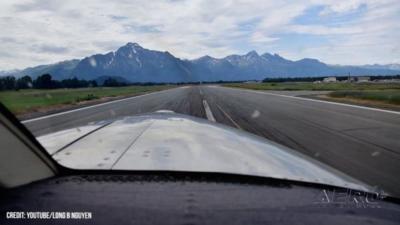
The forum garnered considerable attention from convention attendees due to Alaska’s high dependence on piston-powered aircraft. Alaskan pilots utilize short, often unpaved runways that require versatile aircraft like the Super Cub or DC-3 instead of larger turbine planes that are standard for most US carriers.

“Without a dependable source of avgas, many Alaskans would lose their only access to numerous critical services, including medical care, groceries, and mail,” explained Will Day, executive director of the Alaska Air Carriers Association.

Alaskan carriers' reliance on piston engines means that they are uniquely impacted by the industry’s plan to move out 100 low-lead in favor of a more sustainable fuel source. While they support aviation’s commitment to reaching net-zero carbon emissions by 2050, operators have been very clear that a proven solution will need to come forward before any sort of transition can begin.

“Alaskan aircraft operators view the EAGLE initiative as a proactive, problem-solving effort aimed at finding a safe, reliable, and cost-effective replacement for 100 low-lead before it becomes unavailable,” Day continued.

A typical Alaskan operation looks very different from one in the continental US, and testing standards must reflect that. Day noted that “In many remote locations, aviation fuel is often stored for up to a year in temperatures ranging from minus 50 to above 100 degrees. It must be very stable.”

FMI: www.alaskaaircarriers.org

Advertisement

More News

Classic Aero-TV: In Praise of Alabama’s Patriot Aircraft USA

From 2023 (YouTube Edition): "Ain’t Your Daddy’s Super Cub”—Don Wade Co-owned by Don and Ron Wade—the former of Don’s Dream Machines, a storied >[...]

NTSB Final Report: Cirrus Design Corp SR22

Pilot-Rated Passenger Reported That The Pilot Did Not Adequately “Round Out” The Landing Flare And The Airplane Bounced And Yawed To The Right Analysis: The pilot state>[...]

ANN's Daily Aero-Term (12.21.25): Dead Reckoning

Dead Reckoning Dead reckoning, as applied to flying, is the navigation of an airplane solely by means of computations based on airspeed, course, heading, wind direction, and speed,>[...]

ANN's Daily Aero-Linx (12.21.25)

Aero Linx: Lake Amphibian Club This website is created and sponsored by the Lake Amphibian Club, to help spread the word about these wonderful, versatile amphibians that can land j>[...]

Aero-News: Quote of the Day (12.21.25)

“I am deeply honored to be sworn in as NASA administrator. NASA’s mission is as imperative and urgent as ever — to push the boundaries of human exploration, ignit>[...]

blog comments powered by Disqus



Advertisement

Advertisement

Podcasts

Advertisement

© 2007 - 2025 Web Development & Design by Pauli Systems, LC

