

NASA Issues Report On Loss Of Shuttle Columbia Crew | Aero-News Network
Aero-News Network
RSS icon RSS feed
podcast icon MP3 podcast
Subscribe Aero-News e-mail Newsletter Subscribe

Airborne Unlimited -- Most Recent Daily Episodes

Episode Date

Airborne-Monday

Airborne-Tuesday

Airborne-Wednesday Airborne-Thursday

Airborne-Friday

Airborne On YouTube

Airborne-Unlimited-11.24.25

AirborneNextGen-
11.18.25

Airborne-Unlimited-11.19.25

Airborne-AffordableFlyers-11.20.25

AirborneUnlimited-11.21.25

LIVE MOSAIC Town Hall (Archived): www.airborne-live.net

Tue, Dec 30, 2008

NASA Issues Report On Loss Of Shuttle Columbia Crew

Details Final, Critical Moments Of STS-107

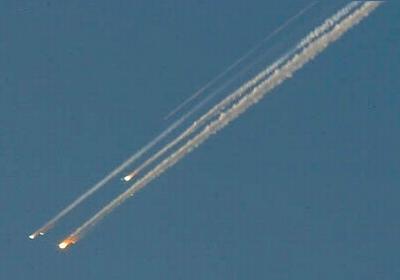
Continuing what's become a maddening agency tradition of issuing controversial reports near the very end of the year -- and the news cycle -- on Tuesday NASA quietly released a 400-page report detailing the circumstances that led to the February 2003 loss of the crew of the space shuttle Columbia.

The cause of the accident itself, of course, had been determined well before Tuesday. As ANN reported, the Columbia Accident Investigation Board quickly determined in that a chunk of insulating foam separated from the shuttle's external fuel tank during its January 16 launch, and struck the leading edge of the shuttle's left wing... resulting in a small but critical hole in the shuttle's fragile carbon-carbon heat shield tiles, that allowed superheated plasma formed during reentry to penetrate the shuttle's internal structure.

The report released Tuesday -- titled "Columbia Crew Survival Investigation Report" -- details the final moments of Columbia's seven-member crew.

"The members of this team have done an outstanding job under difficult and personal circumstances," said Johnson Space Center Director Michael L. Coats. "Their work will ensure that the legacy of Columbia and her heroic crew continues to be the improved safety of future human spaceflights worldwide."

The team's final report includes 30 recommendations to improve spacecraft design and crew safety. The recommendations cover a broad range of subjects from crew training, procedures, restraints and individual safety equipment to spacecraft design methods and recommendations regarding future accident investigations.

In addition to the sheer size of the report and the breadth of engineering detail it contains, it is also disturbing to read... not because of the grisly details it contains, per se, but rather in how it graphically details the crew's final moments in dispassionate, critical detail.

"The Columbia depressurization event occurred so rapidly that the crew members were incapacitated within seconds, before they could configure the suit for full protection from loss of cabin pressure," the report reads. "Although circulatory systems functioned for a brief time, the effects of the depressurization were severe enough that the crew could not have regained consciousness. This event was lethal to the crew."

The link to the full 10MB report is below.

FMI: Read The Report (.pdf)

Advertisement

More News

Classic Aero-TV: Extra; the Airplane, the Man, and His Grand DeLand Plan

From 2023 (YouTube Edition): Germany’s Best by Way of Florida Established in 1980 by German aerobatic pilot Walter Extra as a means by which to design and develop his own air>[...]

ANN FAQ: Follow Us On Instagram!

Get The Latest in Aviation News NOW on Instagram Are you on Instagram yet? It's been around for a few years, quietly picking up traction mostly thanks to everybody's new obsession >[...]

Aero-News: Quote of the Day (11.27.25)

“Achieving PMA for the S-1200 Series magnetos is another step in expanding our commitment to providing the aviation community with the most trusted and durable ‘firewal>[...]

ANN's Daily Aero-Term (11.27.25): Ultralight Vehicle

Ultralight Vehicle A single-occupant aeronautical vehicle operated for sport or recreational purposes which does not require FAA registration, an airworthiness certificate, or pilo>[...]

ANN's Daily Aero-Linx (11.27.25)

Aero Linx: The de Havilland Moth Club Ltd The de Havilland Moth Club evolved from a belief that an association of owners and operators of Moth aeroplanes should be formed to create>[...]

blog comments powered by Disqus



Advertisement

Advertisement

Podcasts

Advertisement

© 2007 - 2025 Web Development & Design by Pauli Systems, LC

