
Runways A Little Safer These Days | Aero-News Network
Aero-News Network
RSS icon RSS feed
podcast icon MP3 podcast
Subscribe Aero-News e-mail Newsletter Subscribe

Airborne Unlimited -- Most Recent Daily Episodes

Episode Date

Airborne-Monday

Airborne-Tuesday

Airborne-Wednesday Airborne-Thursday

Airborne-Friday

Airborne On YouTube

Airborne-SpecialEpisode-12.15.25

AirborneNextGen-
12.16.25

Airborne-Unlimited-12.10.25

Airborne-AffordableFlyers-12.11.25

AirborneUnlimited-12.12.25

AFE 2025 LIVE MOSAIC Town Hall (Archived): www.airborne-live.net

Wed, Sep 01, 2004

Runways A Little Safer These Days

FAA Says Fewer Chances For Collisions

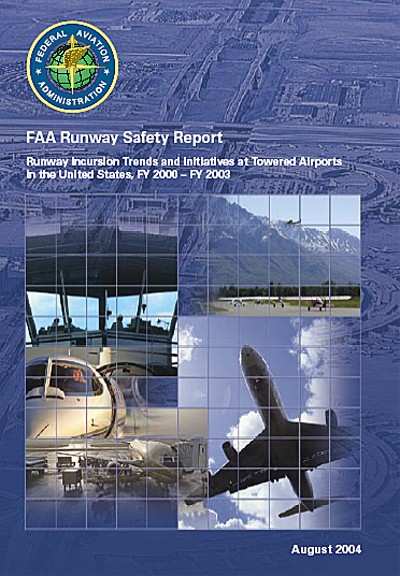
Runways at the nation’s airports are getting safer for the second year in a row. Runway incursions dropped 20 percent over a four-year period, according to an FAA report released today. US airports recorded 324 incursions last year, of which just 32 were characterized as high risk. Those serious incidents have dropped 50 percent since 2000. For the second consecutive year, none of the most serious incursions involved two large commercial jets.

"The numbers tell the story. American runways are the safest the world has to offer," said FAA Administrator Marion Blakey. "Pilot awareness programs and new technology continue to pay real safety dividends on the nation’s runways."

The FAA continues leading an industry-wide effort to improve runway safety through increased education, training and awareness, along with new technology and improved airport runway markings and lighting. To prevent runway accidents, the FAA has delivered new technology called the Airport Movement Area Safety System (AMASS) to 34 airports, and is deploying the new Airport Surface Detection Equipment Model X (ASDE-X) to another 25 airports.

By definition, a runway incursion is when an aircraft, vehicle, person, or object on the ground creates a collision hazard, or is too close to an aircraft taking off, intending to take off, landing, or intending to land.

The 324 incursions last year were 15 less than in 2002. Under the FAA’s method of measuring incursions by severity categories from A to D, the higher-risk (A and B) incursions dropped to 32 last year, five less than in 2002. The incursion rate per million takeoffs and landings was 5.2, unchanged from 2002.

Reducing runway incursions is one critical safety objective of the FAA’s strategic "Flight Plan" through 2008. One of the "Flight Plan’s" performance targets is to reduce the number of category A and B runway incursions by a minimum of 48 percent, with no more than an average of 27 serious incursions per year by fiscal year 2008.

FMI: www.faa.gov/runwaysafety/pdf/report4.pdf

Advertisement

More News

ANN's Daily Aero-Term (12.14.25): Local Airport Advisory (LAA)

Local Airport Advisory (LAA) A service available only in Alaska and provided by facilities that are located on the landing airport, have a discrete ground-to-air communication freq>[...]

Airborne 12.08.25: Samaritan’s Purse Hijack, FAA Med Relief, China Rocket Fail

Also: Cosmonaut Kicked Out, Airbus Scales Back, AF Silver Star, Russian A-60 Clobbered A Samaritan’s Purse humanitarian flight was hijacked on Tuesday, December 2, while atte>[...]

ANN's Daily Aero-Linx (12.15.25)

Aero Linx: Michigan Helicopter Association (MHA) The Michigan Helicopter Association (MHA) exists to bring together people who share an interest in helicopters, including private, >[...]

Airborne 12.10.25: New Gulfstream, ATC Integrator, Outrageous FFZ User Fees

Also: Airbus Acquisition, USCG Helo Sniper, Remember Pearl Harbor, New Thunderbird 1 Gulfstream’s newest addition to its next-gen lineup, the super-midsize G300, is officiall>[...]

Airborne-NextGen 12.09.25: Amazon Crash, China Rocket Accident, UAV Black Hawk

Also: Electra Goes Military, Miami Air Taxi, Hypersonics Lab, MagniX HeliStrom Amazon’s Prime Air drones are back in the spotlight after one of its newest MK30 delivery drone>[...]

blog comments powered by Disqus



Advertisement

Advertisement

Podcasts

Advertisement

© 2007 - 2025 Web Development & Design by Pauli Systems, LC

