

EAA Comments on New FAA Destroyed and Scrapped Aircraft Policy | Aero-News Network
Aero-News Network
RSS icon RSS feed
podcast icon MP3 podcast
Subscribe Aero-News e-mail Newsletter Subscribe

Airborne Unlimited -- Most Recent Daily Episodes

Episode Date

Airborne-Monday

Airborne-Tuesday

Airborne-Wednesday Airborne-Thursday

Airborne-Friday

Airborne On YouTube

Airborne-Unlimited-12.22.25

AirborneNextGen-
12.23.25

Airborne-Unlimited-12.10.25

Airborne-FltTraining-12.18.25

AirborneUnlimited-12.19.25

AFE 2025 LIVE MOSAIC Town Hall (Archived): www.airborne-live.net

Thu, Aug 24, 2023

EAA Comments on New FAA Destroyed and Scrapped Aircraft Policy

Journey’s End in Feds Meeting

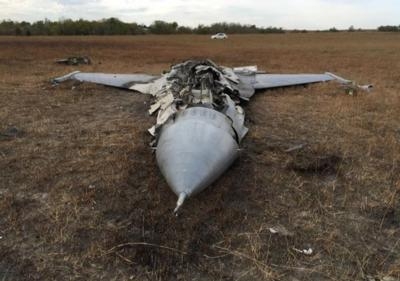
The EAA has filed comments germane to a new FAA advisory circular (AC) titled Destroyed and Scrapped Aircraft. The AC makes extensive references to FAA’s Order 8900.19, with which it shares a title. Set forth in 2018, Order 8900.19 was issued without the customary solicitation of public comment.

The order and AC address the means and criteria by which determinations pertaining to the destruction and scrapping of aircraft are made. Aircraft declared fit for destruction and scrapping cannot, per 14 CFR 45.13 and 47.41, be rebuilt. Order 8900.19 defines a destroyed aircraft as having no repairable “primary structures” and a “scrapped” aircraft as “having been discarded and disposed of in a manner that it cannot be repaired to an airworthy condition.” Superficially, the antecedent interpretations appear reasonable insofar as they permit all but the most severely damaged aircraft to return to airworthiness after undergoing appropriate repairs.

EAA aims to ensure all FAA policies are consistent and reasonably applied in the proverbial field.

To the subject of the FAA’s new Destroyed and Scrapped Aircraft AC, the Association states: “While we are not aware of significant problems in the use of this policy in the past five years, EAA’s comments to the AC urge the greatest flexibility possible, including the expanded use of designees in determining a damaged or disposed aircraft’s status and developing a plan for return to service.”

The EAA continues: “We feel that more designee options would ease the workload on FAA field offices while bringing decision makers with ample practical experience into the fold.”

In its comments pertaining to the new FAA AC, the EAA contends: “This change would not remove the FSDO or [Aircraft Certification Branch] from being eligible to review repair data; rather, it would provide an additional option to the builder/repairer to utilize, if desired.”

FMI: www.eaa.org

Advertisement

More News

Classic Aero-TV: In Praise of Alabama’s Patriot Aircraft USA

From 2023 (YouTube Edition): "Ain’t Your Daddy’s Super Cub”—Don Wade Co-owned by Don and Ron Wade—the former of Don’s Dream Machines, a storied >[...]

NTSB Final Report: Cirrus Design Corp SR22

Pilot-Rated Passenger Reported That The Pilot Did Not Adequately “Round Out” The Landing Flare And The Airplane Bounced And Yawed To The Right Analysis: The pilot state>[...]

ANN's Daily Aero-Term (12.21.25): Dead Reckoning

Dead Reckoning Dead reckoning, as applied to flying, is the navigation of an airplane solely by means of computations based on airspeed, course, heading, wind direction, and speed,>[...]

ANN's Daily Aero-Linx (12.21.25)

Aero Linx: Lake Amphibian Club This website is created and sponsored by the Lake Amphibian Club, to help spread the word about these wonderful, versatile amphibians that can land j>[...]

Aero-News: Quote of the Day (12.21.25)

“I am deeply honored to be sworn in as NASA administrator. NASA’s mission is as imperative and urgent as ever — to push the boundaries of human exploration, ignit>[...]

blog comments powered by Disqus



Advertisement

Advertisement

Podcasts

Advertisement

© 2007 - 2025 Web Development & Design by Pauli Systems, LC

