Working With French Space Agency CNES
ESA and the French space agency CNES have signed an important agreement that will see the two agencies improve interoperability between their mission control facilities on the ground, enhancing the abilities of each organization in space.
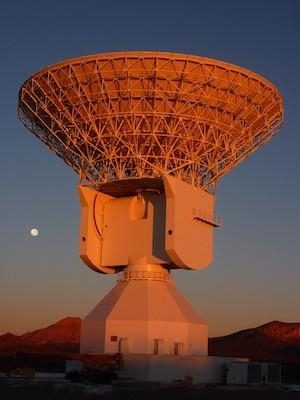
The European ‘Network of Operations Centers’ will enable opportunities for joint action, knowledge sharing and technical interchange, and allow engineers and other professionals to benefit from crossed exchanges and mobility.
It will generate savings for European taxpayers through avoidance of duplication, and through optimisation of existing capabilities and capacity on a wider European scale.
The role of any mission control center is to operate spacecraft in orbit, sending commands and downloading status information on the health and functioning of the satellite as well as the vital science data gathered by the craft’s instruments.
Training teams and building, operating and improving the mission control systems and ground stations needed to fly any mission is a complex process. Under the Network of Operations Centers initiative, Europe's institutional control centers are joining forces, with each benefitting from the expertise and capabilities available at the other while reducing risk and increasing synergies for all missions. “By sharing our knowledge, ground infrastructure and technologies, we can drive innovation across all of our agencies for the benefit of Europe," says Rolf Densing, ESA’s Director of Operations. “Joining forces means we can achieve together more than we could on our own, as we increase coordination, share operational tools and infrastructure and maximize the return on investment in ground systems and operations for Europe.”
ESA’s main mission control center is located in Darmstadt, Germany, while CNES’s is in Toulouse, France. “This Memorandum of Cooperation marks a cornerstone for our agencies, as we develop our complementarity and face the challenges that lie ahead, together” says Frédéric Pradeilles, Director of Digital, Ground segments and Operations.
The two agencies have set a priority on cooperation across the full spectrum of ground systems engineering, from mission control and flight dynamics to laser-based optical communication and enhanced cooperation in the field of international technical standards.
By sharing some of the on-the-ground infrastructure, such as spacecraft tracking stations and antennas, agencies in the network of operations centers will enjoy increased robustness and redundancy in their ability to communicate with their spacecraft, reducing risk for costly missions.
The two agencies will also benefit from using engineering knowledge and data systems that can work together, improving interoperability.
The ESA-CNES agreement follows a similar agreement made between ESA and DLR, whose control center in Oberpfaffenhofen, near Munich, in December last year.
As much of the mission control hardware and software used by the three agencies is made in Europe, the network of operations centers effort will also boost opportunities and competitiveness on the world market for European high-tech industry.
The agreement was signed on October 24 at the International Astronautical Congress in Washington D.C.
(Image provided with ESA news release)



 ANN's Daily Aero-Term (12.13.25): Light Gun


 See All