

Lab Creates Program To Virtually Blow Up Jets For TSA | Aero-News Network
Aero-News Network
RSS icon RSS feed
podcast icon MP3 podcast
Subscribe Aero-News e-mail Newsletter Subscribe

Airborne Unlimited -- Most Recent Daily Episodes

Episode Date

Airborne-Monday

Airborne-Tuesday

Airborne-Wednesday Airborne-Thursday

Airborne-Friday

Airborne On YouTube

Airborne-Unlimited-12.08.25

AirborneNextGen-
12.09.25

Airborne-Unlimited-12.10.25

Airborne-AffordableFlyers-12.11.25

AirborneUnlimited-12.12.25

AFE 2025 LIVE MOSAIC Town Hall (Archived): www.airborne-live.net

Wed, Oct 15, 2008

Lab Creates Program To Virtually Blow Up Jets For TSA

Computer Model Simulates Effects Of Explosives Blasts

If you want to study the possible effects of a terrorist bomb on an airliner, one obvious way would be to buy retired airliners, and actually blow them up. That's the traditional method, but the Transportation security Administration wanted to know -- in this day and age, can't we accurately simulate an explosion using computers instead?

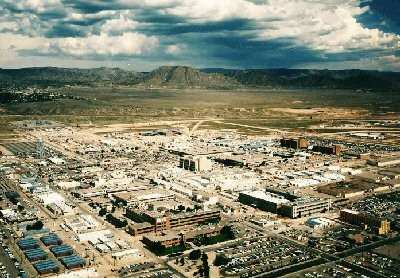
USA Today reports that question has been answered. Researchers at Sandia National Laboratories in Albuquerque, NM have created the first computer model that simulates the effects of a bomb going off on an airliner. The TSA says the tests could eventually lead to changes to the restricted-items list... potentially rendering obsolete the agency's current ban on significant quantities of liquids in carry-on luggage.

"We can make any number of potential changes based on the results," TSA spokesman Christopher White said. "It could affect the amount of any given item we allow on board. It could affect our prohibited-items list."

The TSA says it's also looking at doing separate blast tests on regional jets. Aviation-security consultant and former United Airlines security chief Glen Winn notes smaller RJs are "more vulnerable than a large airplane... A small explosion on a small aircraft is going to be nearer to the critical parts of the airplane."

TSA says it may modify airport bomb scanners so they can better protect the roughly 300,000 passengers who fly RJs each day.

In addition to the potential cost savings, virtual explosions may be more accurate that testing on actual retired airliners. One reason is that advancing technology often means retired planes aren't representative of the current fleet.

And, White notes, "We can do infinite numbers of variables without blowing up infinite numbers of planes."

Compared to trashing real planes, developing the software was cheap. The labs were paid $2 million by the TSA and the Science and Technology Directorate, another branch of the Department of Homeland Security.

FMI: www.tsa.gov, www.sandia.gov

Advertisement

More News

Aero-News: Quote of the Day (12.11.25)

"The owners envisioned something modern and distinctive, yet deeply meaningful. We collaborated closely to refine the flag design so it complemented the aircraft’s contours w>[...]

ANN's Daily Aero-Term (12.11.25): Nonradar Arrival

Nonradar Arrival An aircraft arriving at an airport without radar service or at an airport served by a radar facility and radar contact has not been established or has been termina>[...]

Classic Aero-TV: David Uhl and the Lofty Art of Aircraft Portraiture

From 2022 (YouTube Edition): Still Life with Verve David Uhl was born into a family of engineers and artists—a backdrop conducive to his gleaning a keen appreciation for the >[...]

Airborne-NextGen 12.09.25: Amazon Crash, China Rocket Accident, UAV Black Hawk

Also: Electra Goes Military, Miami Air Taxi, Hypersonics Lab, MagniX HeliStrom Amazon’s Prime Air drones are back in the spotlight after one of its newest MK30 delivery drone>[...]

Airborne 12.05.25: Thunderbird Ejects, Lost Air india 737, Dynon Update

Also: Trailblazing Aviator Betty Stewart, Wind Farm Scrutiny, Chatham Ban Overturned, Airbus Shares Dive A Thunderbird pilot, ID'ed alternately as Thunderbird 5 or Thunderbird 6, (>[...]

blog comments powered by Disqus



Advertisement

Advertisement

Podcasts

Advertisement

© 2007 - 2025 Web Development & Design by Pauli Systems, LC

