NASA Mishap Board Identifies Cause Of X-43A Failure | Aero-News Network
Aero-News Network
RSS icon RSS feed
podcast icon MP3 podcast
Subscribe Aero-News e-mail Newsletter Subscribe

Airborne Unlimited -- Most Recent Daily Episodes

Episode Date

Airborne-Monday

Airborne-Tuesday

Airborne-Wednesday Airborne-Thursday

Airborne-Friday

Airborne On YouTube

Airborne-SpecialEpisode-12.15.25

AirborneNextGen-
12.16.25

Airborne-Unlimited-12.10.25

Airborne-AffordableFlyers-12.11.25

AirborneUnlimited-12.12.25

AFE 2025 LIVE MOSAIC Town Hall (Archived): www.airborne-live.net

Sun, Jul 27, 2003

NASA Mishap Board Identifies Cause Of X-43A Failure

No Single Factor In June's Hyper-X Mishap

The NASA mishap investigation board, charged to review the loss of the X-43A Hyper-X program research vehicle during its June 2, 2001 launch, concluded no single factor or potential contributing factor caused the mishap. The flight failed because the vehicle's control system design was deficient in several analytical modeling areas, which overestimated the system's margins.
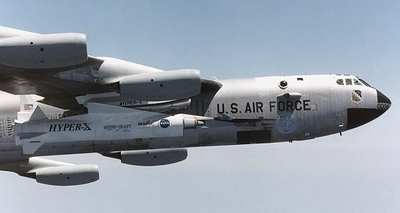
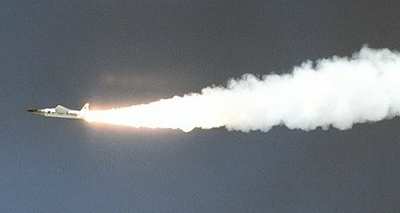
NASA's Hyper-X program is developing "air breathing" engine technologies that promise performance benefits for future hypersonic aircraft and reusable space launch vehicles. In the X-43A test program, three, 12-foot long, unpiloted vehicles were planned to fly up to 10 times the speed of sound to demonstrate scramjet, or supersonic-combustion ramjet, technologies. The mishap occurred on the first of three planned flights.

For the launch, the X-43A was attached to the nose of a modified Pegasus launch vehicle, which was carried by NASA's modified B-52 bomber. Seventy-five minutes after takeoff, at an altitude of approximately 24,000 ft., the Pegasus was released. Its solid rocket motor ignited 5.2 seconds later sending the launch vehicle and research vehicle payload on its test flight. Eight seconds later, the vehicle began its planned pitch up maneuver, which was expected to take it to an altitude of approximately 95,000 ft.

Shortly thereafter, the X-43A began to experience a control anomaly characterized by a roll oscillation. At 13.5 seconds after release and at an altitude of approximately 22,000 ft., structural overload of the starboard elevon occurred. The severe loss of control caused the X-43A to deviate significantly from its planned trajectory, and as a result, it was destroyed by range safety 48.6 seconds after release.

The mishap board found the major contributors to the mishap were modeling inaccuracies in the fin actuation system, modeling inaccuracies in the aerodynamics, and insufficient variations of modeling parameters. The flight mishap could only be reproduced when all of the modeling inaccuracies with uncertainty variations were incorporated in the analysis.

"I want to thank the Mishap Investigation Board for their comprehensive and thorough evaluation," said Dr. Victor Lebacqz, acting Associate Administrator for NASA's Office of Aerospace Technology. "The findings and recommendations of the board greatly enhance our opportunity for a successful second flight," he said.

Nine chapters of the 11-chapter mishap investigation report are available to the public. Chapters nine and 10, and supporting data, are being withheld to comply with U.S. export control regulations, protection of industry proprietary information, or for pre-decisional reasons.

FMI: The releasable chapters of the reporthttp://llis.nasa.gov/www.nasa.gov

Advertisement

More News

ANN's Daily Aero-Term (12.13.25): Light Gun

Light Gun A handheld directional light signaling device which emits a brilliant narrow beam of white, green, or red light as selected by the tower controller. The color and type of>[...]

Aero-News: Quote of the Day (12.13.25)

“We have performed extensive ground testing by comparing warm up times, full power tethered pulls, and overall temperatures in 100 degree environments against other aircraft >[...]

NTSB Final Report: Gippsland GA-8

While Taxiing To Parking The Right Landing Gear Leg Collapsed, Resulting In Substantial Damage Analysis: The pilot made a normal approach with full flaps and landed on the runway. >[...]

Classic Aero-TV: Historically Unique -- Marlin Horst's Exquisite Fairchild 71

From 2014 (YouTube Edition): Exotic Rebuild Reveals Aerial Work Of Art During EAA AirVenture 2014, ANN's Michael Maya Charles took the time to get a history lesson about a great ai>[...]

Airborne 12.12.25: Global 8000, Korea Pilot Honors, AV-30 Update

Also: Project Talon, McFarlane Acquisition, Sky-Tec Service, JPL Earth Helo Tests Bombardier has earned a round of applause from the business aviation community, celebrating the fo>[...]

blog comments powered by Disqus



Advertisement

Advertisement

Podcasts

Advertisement

© 2007 - 2025 Web Development & Design by Pauli Systems, LC