
No 'Snow-Days' For Sikorsky Flight Test Program | Aero-News Network
Aero-News Network
RSS icon RSS feed
podcast icon MP3 podcast
Subscribe Aero-News e-mail Newsletter Subscribe

Airborne Unlimited -- Most Recent Daily Episodes

Episode Date

Airborne-Monday

Airborne-Tuesday

Airborne-Wednesday Airborne-Thursday

Airborne-Friday

Airborne On YouTube

Airborne-Unlimited-12.08.25

AirborneNextGen-
12.09.25

Airborne-Unlimited-12.10.25

Airborne-AffordableFlyers-12.11.25

AirborneUnlimited-12.12.25

AFE 2025 LIVE MOSAIC Town Hall (Archived): www.airborne-live.net

Thu, Feb 13, 2003

No 'Snow-Days' For Sikorsky Flight Test Program

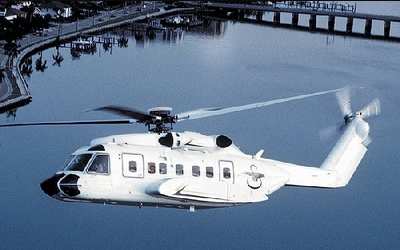
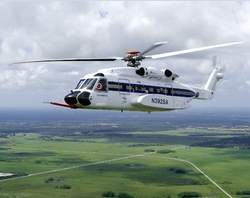
Sikorsky's S-92 helicopter recently passed the FAA's Falling and Blowing Snow qualification testing. The aircraft achieved FAA Type Certification in December 2002. Operating on a special FAA clearance, S-92 prototype aircraft #4 tackled a severe snowstorm in Hamilton, NY. Located in the Lake Ontario snow belt, 25 miles south of Syracuse, Hamilton is home to some of the most treacherous weather conditions in the country.

Waiting for just such a weather occurrence, the S-92 launched from Sikorsky's main plant in Stratford, Conn., on January 31st. The helicopter arrived in Hamilton just in time to experience heavy snowfall, high ground accumulations, and visibilities that normally shut down flight operations, yet the aircraft was able to achieve its requirements for U.S. FAA environmental certification.

Aircraft #4 accomplished 20 minutes of taxiing, five minutes of hover and an hour of forward flight, all in snowy conditions with temperatures ranging from 25-34 degrees Fahrenheit and less than a quarter mile of visibility.

"The aircraft performed flawlessly, with its systems handling all of the snow we could find," said Ron Doeppner, S-92 Experimental Pilot. "Especially during white-out conditions that can heavily tax the engine inlets."

Several Hamilton residents, upon hearing the helicopter orbit the airport but unable to see the aircraft in the snow, called the police to report an aircraft in distress. With the airport closed to flight traffic, residents apparently did not believe that an aircraft could navigate such a severe storm. When local police arrived at the airport, the S-92 crew convinced the local constabulary that nothing was amiss.

"Instead, we found the perfect storm," said Rick Becker, Engineering Test Pilot.

Before it is allowed to transport passengers, each aircraft must comply with U.S. Government standards for strength and safety. The S-92 now meets FAR Part 29 Airline Transport Rotorcraft, Amendment 45, the most stringent rotorcraft safety requirements imposed to date.

FMI: www.sikorsky.com

Advertisement

More News

ANN's Daily Aero-Term (12.13.25): Light Gun

Light Gun A handheld directional light signaling device which emits a brilliant narrow beam of white, green, or red light as selected by the tower controller. The color and type of>[...]

Aero-News: Quote of the Day (12.13.25)

“We have performed extensive ground testing by comparing warm up times, full power tethered pulls, and overall temperatures in 100 degree environments against other aircraft >[...]

NTSB Final Report: Gippsland GA-8

While Taxiing To Parking The Right Landing Gear Leg Collapsed, Resulting In Substantial Damage Analysis: The pilot made a normal approach with full flaps and landed on the runway. >[...]

Classic Aero-TV: Historically Unique -- Marlin Horst's Exquisite Fairchild 71

From 2014 (YouTube Edition): Exotic Rebuild Reveals Aerial Work Of Art During EAA AirVenture 2014, ANN's Michael Maya Charles took the time to get a history lesson about a great ai>[...]

Airborne 12.12.25: Global 8000, Korea Pilot Honors, AV-30 Update

Also: Project Talon, McFarlane Acquisition, Sky-Tec Service, JPL Earth Helo Tests Bombardier has earned a round of applause from the business aviation community, celebrating the fo>[...]

blog comments powered by Disqus



Advertisement

Advertisement

Podcasts

Advertisement

© 2007 - 2025 Web Development & Design by Pauli Systems, LC

