
Airlines Finding Turboprops More Economical Than Regional Jets | Aero-News Network
Aero-News Network
RSS icon RSS feed
podcast icon MP3 podcast
Subscribe Aero-News e-mail Newsletter Subscribe

Airborne Unlimited -- Most Recent Daily Episodes

Episode Date

Airborne-Monday

Airborne-Tuesday

Airborne-Wednesday Airborne-Thursday

Airborne-Friday

Airborne On YouTube

Airborne-Unlimited-12.08.25

AirborneNextGen-
12.02.25

Airborne-Unlimited-12.03.25

Airborne-FltTraining-12.04.25

AirborneUnlimited-12.05.25

AFE 2025 LIVE MOSAIC Town Hall (Archived): www.airborne-live.net

Tue, Jul 10, 2012

Airlines Finding Turboprops More Economical Than Regional Jets

Many Airlines Shifting To More Efficient, Smaller Aircraft On Some Routes

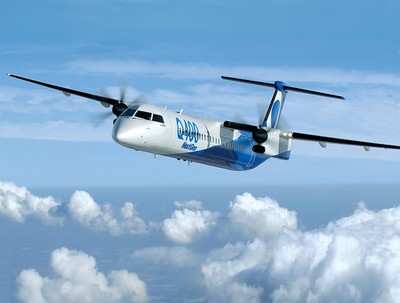
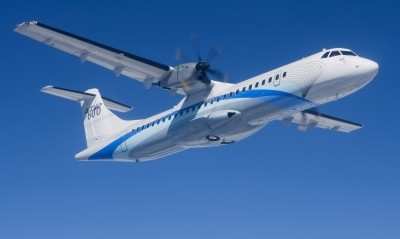
As some smaller and low-cost airlines look at short-haul domestic routes as a way to boost the bottom line, they're also finding that turboprop airplanes like the Bombardier Q400 and ATR-72 series are a better fit than single-aisle airliners, or even regional jets.

The Wall Street Journal reports that turboprops have been almost double that of regional jets over the past five years globally, driven largely by increases in fuel prices. The way the math works out, airlines can operate a 70 seat turboprop for about the same cost per passenger mile as they can a 50 seat RJ.

Another factor cited by WestJet, a Canadian carrier that flies a large fleet of Q400 aircraft, is that airlines can pay turboprop pilots less than their jet-qualified counterparts.

All of these factors have turboprop manufacturers like ATR in France and Bombardier in Canada ramping up their assembly lines to produce more airplanes. John Moore, head of sales for ATR, told the WSJ that there is a three-year backlog of orders, even when they boost production to seven airplanes a month by 2014. That's a 60% production increase.

The companies are also working to make the airplanes nicer inside for passengers. Philippe Poutissou, vice president for marketing at Bombardier's commercial aircraft unit said that the company is considering a 90-100 passenger version of the Q400, and ATR Chief Executive Filippo Bagnato said a stretched version of the ATR-72 might also make sense for the company.

The move is also sparking an increase in research and development of more efficient turboprop engines. It seems like for the foreseeable future, with fuel prices still unstable and airlines continuing to struggle, that the turboprops are back.

(Photos from file top: Bombardier Q400, bottom: ATR-72-600)

FMI: www.bombardier.com, www.atraircraft.com/

Advertisement

More News

Aero-News: Quote of the Day (12.07.25)

“This vote sends an undeniable message to Air Transat management: We are unified, resolute, and have earned a contract that reflects today’s industry standards, not the>[...]

ANN's Daily Aero-Linx (12.07.25)

Aero Linx: Beech Aero Club The Beech Aero Club (BAC) is the international type club for owners and pilots of the Beech Musketeer aircraft and its derivatives, the Sport, Super, Sun>[...]

NTSB Final Report: Lafferty Jack Sea Rey

While Landing In The River, The Extended Landing Gear Contacted The Water And The Airplane Nosed Over, Resulting In Substantial Damage Analysis: The pilot of the amphibious airplan>[...]

Classic Aero-TV: The B29 SuperFortress ‘Doc’ - History in Flight

From 2022 (YouTube Edition): Carrying the Legacy of The B-29 For Generations to Come We had a chance to chat with the Executive Director of B-29 Doc, Josh Wells, during their stop >[...]

Airborne 12.08.25: Samaritan’s Purse Hijack, FAA Med Relief, China Rocket Fail

Also: Cosmonaut Kicked Out, Airbus Scales Back, AF Silver Star, Russian A-60 Clobbered A Samaritan’s Purse humanitarian flight was hijacked on Tuesday, December 2, while atte>[...]

blog comments powered by Disqus



Advertisement

Advertisement

Podcasts

Advertisement

© 2007 - 2025 Web Development & Design by Pauli Systems, LC

