Mon, Oct 01, 2012
Included Multiple Electronic Repellers In Airport Design
The Kunming Changshui International Airport – located in the southwestern portion of China – has been designed and constructed with an integrated comprehensive bird control system. Since the New Kunming Airport opened in June of this year, airport facility managers have reported a significant reduction in pest bird presence.
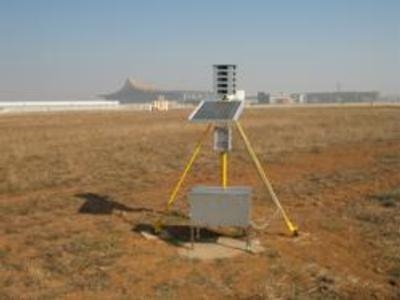
The Kunming Changshui International Airport is set on a high plateau in a mountainous area about fifteen miles northeast of the Kunming city center. The location receives wind currents from the Indian Ocean in the west and the Pacific Ocean in the east, creating a flurry of bird activity in the area. Between this and the region’s rural nature, wildlife is abundant. Going into the design process, the airport planning team knew pest birds would be problematic for runway conditions and air traffic safety.
Before construction began, the New Kunming Airport facility managers met with the President and the CEO of Yunnan Sunking Trading Company – Mr. Yuhui and Mr. Dong Wu, respectively. Working together, they developed a bird control plan that combined two types of Bird-X electronic bird repellers, covering the entire property.
The first device was the BroadBand PRO, an electronic device that combines sonic and ultrasonic broadcasts to repel pest birds up to six acres. The audible sounds include bird distress calls and predator cries that warn birds to stay away. The ultrasonic frequencies are nearly silent to humans but extremely irritating and disorienting to pest birds. The second device used was the Mega Blaster PRO. The Mega Blaster is a highly powerful sonic bird control system that uses intermittent distress calls to create a “danger zone” that frightens birds away for good. The 20-speaker tower covers up to thirty acres.
The Kunming Changshui Airport managers decided that permanent installation of electronic bird repellers would be an excellent investment for long-term bird control success. Other Chinese airports were using gas cannons and various pyrotechnic scares to remove birds from their airfields. Mr. Dong Wu of Yunnan Sunking Trading Co. estimates that these airports were spending nearly a half million dollars per year on the products. Electronic bird control can be maintained with the flip of a switch or even by using solar power in some cases.
The final program consisted of seventeen BroadBand PRO units and four Mega Blaster PROs. The devices were strategically installed all over the property. It took eighty workers forty-five days to complete the installation.
(Photo provided by Bird-X)
More News
Unmanned Aircraft System (UAS) An unmanned aircraft and its associated elements related to safe operations, which may include control stations (ground, ship, or air based), control>[...]
Aero Linx: Cactus Fly-In The Classic Airplane Association of Arizona, Inc. (CAAA) was incorporated in Arizona as a not for profit corporation on January 10, 2014. The CAAA roster i>[...]
Also: UFC Buys Tecnams, Emirates B777-9 Buy, Allegiant Pickets, F-22 And MQ-20 The NTSB's preliminary report on the UPS Flight 2976 crash has focused on the left engine pylon's sep>[...]
Also: Bell 505 on SAF, NYPA Gets Flak For BizAv 'Abuse', FAA Venezuela Caution, Horizon Update Textron Aviation has confirmed it will be ending production of the Beechcraft Bonanza>[...]
Also: FedEx SAF, Archer Midnight Powertrain Tech, Rocket Lab Record, Perseverance Rover Find EHang has logged a major milestone in the development of its pilotless air taxi, loggin>[...]



 ANN's Daily Aero-Term (11.28.25): Unmanned Aircraft System (UAS)


 See All