
Students Testing Building Blocks For Spacecraft On NASA Rocket Flight | Aero-News Network
Aero-News Network
RSS icon RSS feed
podcast icon MP3 podcast
Subscribe Aero-News e-mail Newsletter Subscribe

Airborne Unlimited -- Most Recent Daily Episodes

Episode Date

Airborne-Monday

Airborne-Tuesday

Airborne-Wednesday Airborne-Thursday

Airborne-Friday

Airborne On YouTube

Airborne-Unlimited-12.01.25

AirborneNextGen-
12.02.25

Airborne-Unlimited-12.03.25

Airborne-FltTraining-12.04.25

AirborneUnlimited-12.05.25

AFE 2025 LIVE MOSAIC Town Hall (Archived): www.airborne-live.net

Mon, Mar 08, 2010

Students Testing Building Blocks For Spacecraft On NASA Rocket Flight

Experiment Will Test "Cubesats"

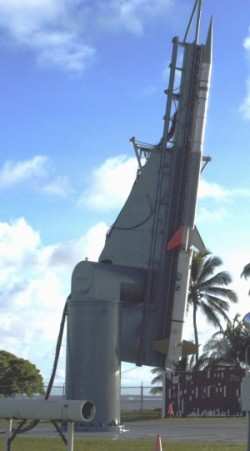
Two spacecraft designed and built by university students in Kentucky and California, which are not much bigger than a child's toy building block, will fly in space for a short period this month to gather information that may be applied to future small Earth orbiting space vehicles. The spacecraft will fly on a NASA suborbital Terrier-Improved Malemute sounding rocket (right) between 0600 and 0900 EST March 11, from NASA's Wallops Flight Facility in Virginia. The backup launch days are March 12 and 13.

The two spacecraft, also known as cubesats, will be ejected during the suborbital flight at approximately 77 miles altitude, 72 seconds into the flight. NASA is flying the cubesats as secondary experiments on the flight which has a main purpose of testing the Improved Malemute rocket motor.

James Lumpp, Director of Space Systems Laboratory at the University of Kentucky and faculty advisor for the project, said, "This is the first time cubesats will be ejected in space on a suborbital trajectory. This capability of leveraging the cubesat satellite standard on a NASA sounding rocket could open a whole new chapter in fast, inexpensive access to space for small payloads."

Students from Kentucky Space (a consortium of Kentucky universities) and California Polytechnic University, San Luis Obispo, built the cubesats using primarily off-the-shelf components. The standard cubesat, a miniaturized satellite for space research, weighs around 2 pounds and is a 4-inch cube. Students from Cal Poly developed the cubesat ejection system used for the flight and students at the University of Kentucky adapted it to work in the sounding rocket.

The Kentucky cubesat, called ADAMASat, was developed by students to allow experimentation with hardware and software subsystems they intend to fly in an orbital cubesat called KySat-1 that will be launched with the NASA Glory mission no earlier than November 2010. The subsystems include an antenna deployment system and power conditioning circuitry.

The Cal Poly cubesat, developed as a test bed for Poly-Sat bus technologies, will be testing an attitude determination system.

Kentucky Space is a consortium of universities including:

  • University of Kentucky
  • Morehead State University
  • University of Louisville
  • Murray State University
  • Kentucky Community and Technical College System

Students will staff several ground stations at Wallops, as well as stations at the University of Kentucky in Lexington, Morehead State University and at the U.S. Naval Academy in Annapolis, MD, to capture the telemetry during the flight. In addition, students will distribute software packages for amateur radio enthusiasts to participate in the project.

FMI: http://www.nasa.gov/centers/wallops/home/index.html

Advertisement

More News

Aero-FAQ: Dave Juwel's Aviation Marketing Stories -- ITBOA BNITBOB

Dave Juwel's Aviation Marketing Stories ITBOA BNITBOB ... what does that mean? It's not gibberish, it's a lengthy acronym for "In The Business Of Aviation ... But Not In The Busine>[...]

NTSB Prelim: Rutan Long-EZ

The Pilot Attempted Several Times To Restart The Engine And Diverted To Long Beach Airport/Daughtery Field On October 20, 2025, about 1603 Pacific daylight time, an experimental am>[...]

ANN's Daily Aero-Term (12.05.25): Hazardous Weather Information

Hazardous Weather Information Summary of significant meteorological information (SIGMET/WS), convective significant meteorological information (convective SIGMET/WST), urgent pilot>[...]

Aero-News: Quote of the Day (12.05.25)

"The latest development underscores the government of Malaysia’s commitment in providing closure to the families affected by this tragedy..." Source: From statements made by >[...]

Airborne-Flight Training 12.04.25: Ldg Fee Danger, Av Mental Health, PC-7 MKX

Also: IAE Acquires Diamond Trainers, Army Drones, FedEx Pilots Warning, DA62 MPP To Dresden Tech Uni The danger to the flight training industry and our future pilots is clear. Dona>[...]

blog comments powered by Disqus



Advertisement

Advertisement

Podcasts

Advertisement

© 2007 - 2025 Web Development & Design by Pauli Systems, LC

