
Sierra Flies Citation S550-Based Super S-II | Aero-News Network
Aero-News Network
RSS icon RSS feed
podcast icon MP3 podcast
Subscribe Aero-News e-mail Newsletter Subscribe

Airborne Unlimited -- Most Recent Daily Episodes

Episode Date

Airborne-Monday

Airborne-Tuesday

Airborne-Wednesday Airborne-Thursday

Airborne-Friday

Airborne On YouTube

Airborne-Unlimited-12.01.25

AirborneNextGen-
12.02.25

Airborne-Unlimited-11.19.25

Airborne-AffordableFlyers-11.20.25

AirborneUnlimited-11.21.25

LIVE MOSAIC Town Hall (Archived): www.airborne-live.net

Sat, Oct 04, 2008

Sierra Flies Citation S550-Based Super S-II

Revitalized Jet Includes New Williams FJ44-3As

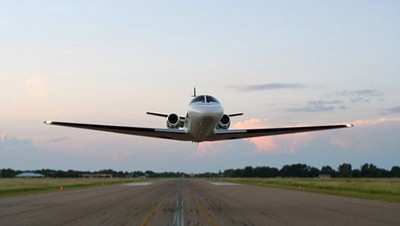
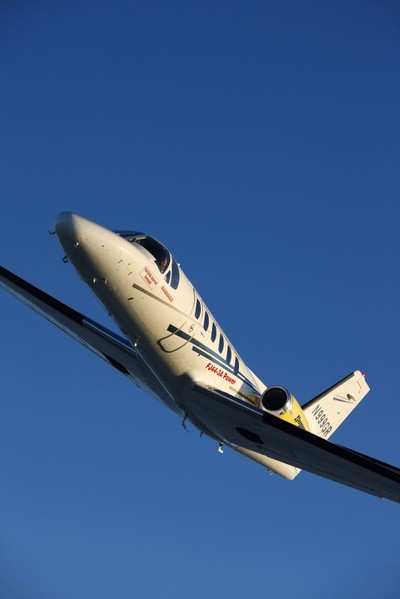
Sierra Industries tells ANN the company has achieved another milestone in its latest Williams re-engining modification program. The Citation S550-based Sierra Super S-II made its maiden flight at Sierra's Uvalde, TX modification center last month.

The company says the Super S-II test aircraft's 36 minute flight on September 26 illustrated the dramatic performance improvements of the dual FADEC-controlled Williams FJ44-3A engines. The aircraft reportedly reached 18,000 feet in only 3 minutes and 45 seconds.

Mark Huffstutler, Sierra's CEO and chief test pilot, exercised the Super S-II on its maiden flight, performing a variety of in-flight system checks. Tests included in-flight shutdown and restart of each engine, stalls and pressurization checks.

"This was a superb first flight -- everything worked so well, it seemed almost routine," Huffstutler said after the flight. "There is no substitute for sheer power -- just what this aircraft needed to achieve its full potential."

First flight of the Super S-11 occurred days after the FAA approved the Supplemental Type Certificate for the "regular" Super II modification for Citation 550s, as ANN reported. Sierra's newest re-engining program involves adding the 2820 lb.-thrust Williams FJ44-3A engines to the Cessna S550 Citation S-II model.

Sierra followed up the first flight with second jaunt on October 1. In a flight lasting 2.9 hours, the aircraft achieved a 43,000 ft cruising altitude and well over 400 knots true airspeed with surprisingly low fuel consumption. The company notes that after nearly 3 hours in the air, the Sierra Super S-II landed with fuel tanks still over half full.

Sporting an advanced supercritical wing design, the FJ44-powered Sierra Super S-II is designed to provide a "stunning" improvement in across-the-board performance. Sierra plans to conduct full flight testing shortly after the aircraft's return from the annual NBAA convention October 6-8, 2008.

FMI: www.sijet.com

Advertisement

More News

ANN's Daily Aero-Term (12.01.25): Convective SIGMET

Convective SIGMET A weather advisory concerning convective weather significant to the safety of all aircraft. Convective SIGMETs are issued for tornadoes, lines of thunderstorms, e>[...]

ANN's Daily Aero-Linx (12.01.25)

Aero Linx: United Flying Octogenarians WELCOME to a most extraordinary group of aviators, the United Flying Octogenarians (UFO). Founded in 1982 with just a handful of pilots, we h>[...]

NTSB Final Report: Remos Aircraft GmbH Remos GX

Pilot’s Decision To Attempt Takeoff With Frost Covering The Airplane’s Wings Analysis: The pilot of the light sport airplane was preparing to depart for a cross-country>[...]

Aero-News: Quote of the Day (12.02.25)

“We’ve paid for the cable line’s repair for the customer and have apologized for the inconvenience this caused them...” Source: Some followup info from an A>[...]

ANN's Daily Aero-Term (12.02.25): Coupled Approach

Coupled Approach An instrument approach performed by the aircraft autopilot, and/or visually depicted on the flight director, which is receiving position information and/or steerin>[...]

blog comments powered by Disqus



Advertisement

Advertisement

Podcasts

Advertisement

© 2007 - 2025 Web Development & Design by Pauli Systems, LC

