
USAF Releases Report On November F-16 Downing In Iraq | Aero-News Network
Aero-News Network
RSS icon RSS feed
podcast icon MP3 podcast
Subscribe Aero-News e-mail Newsletter Subscribe

Airborne Unlimited -- Most Recent Daily Episodes

Episode Date

Airborne-Monday

Airborne-Tuesday

Airborne-Wednesday Airborne-Thursday

Airborne-Friday

Airborne On YouTube

Airborne-Unlimited-12.01.25

AirborneNextGen-
12.02.25

Airborne-Unlimited-11.19.25

Airborne-AffordableFlyers-11.20.25

AirborneUnlimited-11.21.25

LIVE MOSAIC Town Hall (Archived): www.airborne-live.net

Tue, Apr 03, 2007

USAF Releases Report On November F-16 Downing In Iraq

Pilot Unable To Recover From Low Strafing Run

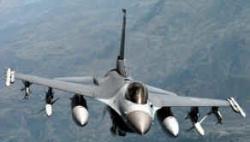
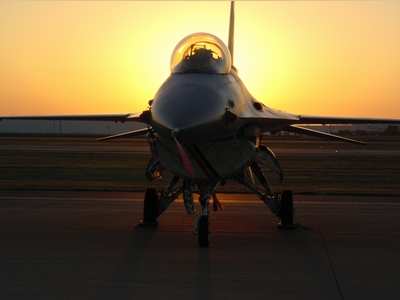
Air Force officials completed an investigation of the F-16 Fighting Falcon accident 20 miles northwest of Baghdad November 27, which resulted in the death of the F-16's pilot, Maj. Troy Gilbert.

According to the accident investigation board report released April 2 by Air Combat Command, Major Gilbert led a flight of two F-16s in an aerial combat mission near Taji, Iraq. On the ground, insurgents were unleashing truck-mounted heavy machine guns, rocket-propelled grenades, small arms fire and mortars to attack coalition troops. In addition, a downed Army helicopter crew was in danger of being overrun.

The report said Major Gilbert engaged the insurgents, launching a strafing attack against enemy vehicles, striking a truck with the F-16's 20-millimeter Gatling gun.

Major Gilbert then conducted a second strafing pass from an extremely low altitude that was not recoverable, impacting the ground. He died immediately on impact.

Operating in a dynamic and stressful environment, Major Gilbert's motivation to succeed helped save the lives of the helicopter crew and other coalition ground forces, said Brig. Gen. David L. Goldfein, the commander of the 49th Fighter Wing at Holloman Air Force Base, NM and president of the accident investigation board.

The official cause of the accident was Major Gilbert's "channelized attention manifested by his desire to maintain a constant visual positive identification of targeted enemy vehicles and subsequent target fixation on these vehicles while they were traveling at a high rate of speed," the report said. These two factors, when combined, caused Major Gilbert "to begin, and then press his attack below a recoverable altitude."

Major Gilbert deployed in September 2006 from Luke AFB in Arizona, to the 332nd Air Expeditionary Wing, Balad Air Base, Iraq. He was assigned as the 332nd Expeditionary Operations Group chief of standardization and evaluation. On the day of the accident, he was flying with the 524th Expeditionary Fighter Squadron.

The aircraft was assigned to the 524th EFS deployed from Cannon AFB near Clovis, NM. The $23.2 million aircraft was destroyed on impact.

FMI: www.af.mil

Advertisement

More News

ANN's Daily Aero-Term (11.29.25): Waypoint

Waypoint A predetermined geographical position used for route/instrument approach definition, progress reports, published VFR routes, visual reporting points or points for transiti>[...]

ANN's Daily Aero-Linx (11.29.25)

Aero Linx: Sentimental Journey to Cub Haven Sentimental Journey Flyin began in 1986 with a group of dedicated volunteers working to provide a sentimental return to Lock Haven, the >[...]

NTSB Prelim: Jabiru USA Sport Aircraft LLC J230-SP

The Pilot Would Often Fly Over Their House At A Low Altitude And That Family Members Would Go Outside To Wave On November 14, 2025, at 1708 eastern standard time, a Jabiru USA Spor>[...]

Classic Aero-TV: Crafting The Future of eVTOL Infrastructure

From 2024 (YouTube Edition): Volatus Infrastructure Paves The Way The name “Volatus” seems to be everywhere these days, popping up in a series of partnerships and proje>[...]

Klyde Morris (11.28.25)

Fortnite Conquers All, Klyde FMI: www.klydemorris.com>[...]

blog comments powered by Disqus



Advertisement

Advertisement

Podcasts

Advertisement

© 2007 - 2025 Web Development & Design by Pauli Systems, LC

