Tue, Sep 03, 2013
Part Of Low Level Wind Shear Alert System
The German Weather Service (DWD) has installed Lockheed Martin WindTracer Doppler lidar systems at the Frankfurt and Munich airports as part of the Low Level Wind Shear Alert System (LLWAS). Selex Systems Integration provided the LLWAS, which includes WindTracer lidar and weather radar. By adding the system at the two largest airports in Germany, DWD takes a leading role in Europe, following International Civil Aviation Organization (ICAO) Recommendation to provide concise information on wind shear which could adversely affect aircraft on the approach or take-off path.
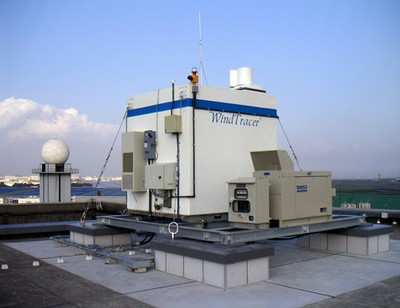
WindTracer monitors atmospheric conditions and measures wind speed and direction along airport flight paths. It complements radar by excelling in dry and clear weather conditions. By using WindTracer, Selex has developed Europe's first radar and lidar operational integration for wind shear detection in all weather conditions.
In Europe, Frankfurt is the third busiest airport, having handled 57.5 million passengers in 2012, according to Airports Council International, and Munich is the seventh busiest, accommodating over 38 million passengers in 2012. "WindTracer represents an affordable wind shear detection system for customers around the globe. Combined with weather radar, the system gives the airport a comprehensive picture of wind hazards," said Dr. Michael Margulis, director of WindTracer Programs at Lockheed Martin. "As a result, the highest detection rate for wind hazards, in both dry and wet environments, is achieved."
WindTracer operates by transmitting pulses of eye-safe infrared laser light that reflect off naturally occurring aerosol particles in the atmosphere. Wind moves these particles, which alters the frequency of the light that is scattered back to the system. WindTracer processes the return signal and automatically detects hazardous winds to ensure operational safety during high-impact weather.
More News
Waypoint A predetermined geographical position used for route/instrument approach definition, progress reports, published VFR routes, visual reporting points or points for transiti>[...]
Aero Linx: Sentimental Journey to Cub Haven Sentimental Journey Flyin began in 1986 with a group of dedicated volunteers working to provide a sentimental return to Lock Haven, the >[...]
The Pilot Would Often Fly Over Their House At A Low Altitude And That Family Members Would Go Outside To Wave On November 14, 2025, at 1708 eastern standard time, a Jabiru USA Spor>[...]
From 2024 (YouTube Edition): Volatus Infrastructure Paves The Way The name “Volatus” seems to be everywhere these days, popping up in a series of partnerships and proje>[...]
Fortnite Conquers All, Klyde FMI: www.klydemorris.com>[...]



 ANN's Daily Aero-Term (11.29.25): Waypoint


 See All