Thu, Nov 03, 2011
Interstate Aviation Committee Report Says Brakes Applied During
Takeoff, Co-Pilot Tested Positive For Drugs
The September crash of a Yak-42 which resulted in the fatal
injury of the entire Russian hockey team Lokomotiv was caused by
multiple pilot errors, according to the official report from the
Interstate Aviation Committee.
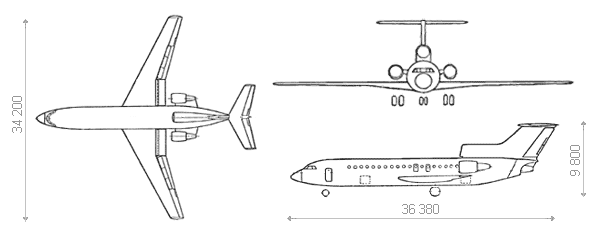
The report, published Wednesday in Russia, says that the primary
cause of the accident was "incorrect braking," which caused
problems during takeoff. In the report, the chair of the
investigations technical commission Aleksey Morozov wrote that both
pilots had previously flown Yak-40s, which have a different brake
pedal configuration than the Yak-42. “Erroneous pressing of
the braking pedals by the crew during take-off is only possible if
a pilot’s feet are placed wrongly. An action, which is small
in terms of force applied and movement of the pedal, may not be
noticed by the pilot,” he said, adding that had the crew
aborted the takeoff, the accident would have been avoided.
The report also says that neither pilot was adequately trained
in the Yak-42, and places the blame for the lack of training on
Yak-Service, the airline which owned the aircraft. “The
captain of the vehicle didn’t receive the full piloting
course for a Yak-42, just the theoretical part. The simulator
training was treated as a pure formality and done irregularly, so
proper piloting skills couldn’t build up,” the
commission chair said.
The Russian News Service RT Novosti reports that another
contributing factor, according to the document, was the presence of
Phenobarbital in the co-pilot's blood. He reportedly had a history
of medical problems.
The report says that the plane was airworthy, and there was no
mechanical failure leading to the crash. The IAC also dismissed the
suggestion that the crew was under pressure from Air Traffic
Control to depart quickly due to a high number of flights the day
of the accident.
More News
Waypoint A predetermined geographical position used for route/instrument approach definition, progress reports, published VFR routes, visual reporting points or points for transiti>[...]
Aero Linx: Sentimental Journey to Cub Haven Sentimental Journey Flyin began in 1986 with a group of dedicated volunteers working to provide a sentimental return to Lock Haven, the >[...]
The Pilot Would Often Fly Over Their House At A Low Altitude And That Family Members Would Go Outside To Wave On November 14, 2025, at 1708 eastern standard time, a Jabiru USA Spor>[...]
From 2024 (YouTube Edition): Volatus Infrastructure Paves The Way The name “Volatus” seems to be everywhere these days, popping up in a series of partnerships and proje>[...]
Fortnite Conquers All, Klyde FMI: www.klydemorris.com>[...]



 ANN's Daily Aero-Term (11.29.25): Waypoint


 See All