Thu, Feb 03, 2011
CAE And Hal Helicopter Training Center Takes Delivery Of Dhruv
Simulator Cockpit
 The Helicopter Academy to Train by
Simulation of Flying (HATSOFF), a joint venture owned equally by
Hindustan Aeronautics Limited (HAL) and CAE, today announced that
its simulator cockpit for the civil/conventional variant of the
Dhruv has arrived at the HATSOFF training center in Bangalore
following design and manufacture at CAE's facility in Montreal,
Canada.
The Helicopter Academy to Train by
Simulation of Flying (HATSOFF), a joint venture owned equally by
Hindustan Aeronautics Limited (HAL) and CAE, today announced that
its simulator cockpit for the civil/conventional variant of the
Dhruv has arrived at the HATSOFF training center in Bangalore
following design and manufacture at CAE's facility in Montreal,
Canada.
The Dhruv simulator cockpit will now be installed and integrated
with the CAE-built full-mission simulator currently in operation at
HATSOFF. The simulator features CAE's revolutionary
roll-on/roll-off cockpit design, which enables cockpits
representing various helicopter types to be used in the simulator.
The cockpit for the civil/conventional variant of the Dhruv is the
second for the HATSOFF training center, and will be
ready-for-training in May 2011. The first cockpit for the simulator
represents the Bell 412 helicopter. Training for Bell 412 operators
commenced in July 2010.
"This is the world's first simulator representing the
indigenously developed HAL Dhruv helicopter and we are excited to
begin offering simulation-based training that will undoubtedly
prove to be a safe and cost-effective method for training Dhruv
helicopter aircrews," said Wg Cdr (Retd) Chandta Datt Upadhyay
Vr.C., Chief Executive Officer of HATSOFF.
The CAE-built full-mission helicopter simulator at HATSOFF and
the Bell 412 cockpit were certified during 2010 to Level D, the
highest qualification for flight simulators, by India's Directorate
General Civil Aviation (DGCA) and the European Aviation Safety
Agency (EASA). HATSOFF expects the cockpit for the
civil/conventional variant of the Dhruv to be certified to Level D
by the DGCA this spring. Additional cockpits for the Indian
Army/Air Force variant of the HAL-built Dhruv and the Eurocopter
Dauphin will be added to the HATSOFF training center over the next
year.
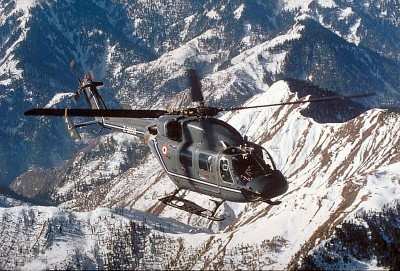
HAL Dhruv Helicopter
The HATSOFF training center, located near HAL's headquarters in
Bangalore, also features multimedia classrooms, computer-based
training, brief/debrief facilities, and a training management
information system. The full-mission simulator features a common
motion system, vibration platform, and visual display system, along
with the four separate cockpit modules that can be used in the
full-mission simulator. When a cockpit is not used in the
full-mission simulator, it will be used as a fixed-based flight
training device (FTD).
More News
The Airplane Made An Uncommanded Right Yaw And Roll, And He Was Unable To Maintain Control Of The Airplane On November 11, 2025, about 1750 central standard time, a Cirrus SR20, N8>[...]
Aero Linx: Florida Antique Biplane Association "Biplanes.....outrageous fun since 1903." That quote really defines what the Florida Antique Biplane Association (FABA) is all about.>[...]
Wind Shear Escape An unplanned abortive maneuver initiated by the pilot in command (PIC) as a result of onboard cockpit systems. Wind shear escapes are characterized by maximum thr>[...]
“Working closely with the Polish Armed Forces, we’re focused on disciplined execution to help enhance Poland’s defense capabilities and keep up with the strong de>[...]
Also: Bell 505 on SAF, NYPA Gets Flak For BizAv 'Abuse', FAA Venezuela Caution, Horizon Update Textron Aviation has confirmed it will be ending production of the Beechcraft Bonanza>[...]



 NTSB Prelim: Cirrus Design Corp SR20


 See All