
AD: Rolls Royce | Aero-News Network
Aero-News Network
RSS icon RSS feed
podcast icon MP3 podcast
Subscribe Aero-News e-mail Newsletter Subscribe

Airborne Unlimited -- Most Recent Daily Episodes

Episode Date

Airborne-Monday

Airborne-Tuesday

Airborne-Wednesday Airborne-Thursday

Airborne-Friday

Airborne On YouTube

Airborne-Unlimited-12.01.25

AirborneNextGen-
12.02.25

Airborne-Unlimited-12.03.25

Airborne-AffordableFlyers-11.20.25

AirborneUnlimited-11.21.25

LIVE MOSAIC Town Hall (Archived): www.airborne-live.net

Mon, Apr 05, 2010

AD: Rolls Royce

AD NUMBER: 2010-07-01

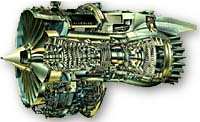
MANUFACTURER: Rolls-Royce plc RB211-Trent 500, 700, and 800 Series Turbofan Engines
SUBJECT: Airworthiness Directive 2010-07-01

SUMMARY: This AD results from mandatory continuing airworthiness information (MCAI) issued by an aviation authority of another country to identify and correct an unsafe condition on an aviation product, and results from the risk of engine fuel-to-oil heat exchanger (FOHE) blockage. The MCAI describes the unsafe condition as:

In January 2008, a Boeing 777 powered by RB211-Trent 800 engines crashed short of the runway as a result of dual loss of engine response during the final stages of approach. The investigation of the incident has established that, under certain ambient conditions, ice can accumulate on the walls of the fuel pipes within the aircraft fuel system, which can then be released downstream when fuel flow demand is increased. This released ice can then collect on the FOHE front face and limit fuel flow through the FOHE. This type of icing event was previously unknown and creates ice concentrations into the fuel system beyond those specified in the certification requirements.
In May 2009, an Engine Indicating and Crew Alerting System (EICAS) surge message was set following a successful go-around maneuver on a single RB211-Trent 700 engine of an A330 aircraft. Subsequent analysis concluded the likely cause to be temporary ice accumulation causing fuel flow restriction in the FOHE. The incident has indicated the potential susceptibility to ice blockage for Airbus aircraft in combination with Rolls-Royce engines that feature similar fuel systems to the RB211-Trent 800.

We are issuing this AD to prevent ice from blocking the FOHE, which could result in an unacceptable engine power loss and loss of control of the airplane.
 

FMI: http://rgl.faa.gov/Regulatory_and_Guidance_Library/rgAD.nsf/0/28A1F5BA17DE1CCC862576F500578B42?OpenDocument

Advertisement

More News

Classic Aero-TV: VerdeGo Debuts VH-3 Hybrid-Electric Powerplant

From 2023 (YouTube Edition): New Propulsion Scheme Optimized for AAM Applications Founded in 2017 by Eric Bartsch, Pat Anderson, and Erik Lindbergh (grandson of famed aviation pion>[...]

NTSB Prelim: Grumman American Avn. Corp. AA-5B

During The Initial Climb, The Engine Began To Operate Abnormally And, After About Three Seconds, Experienced A Total Loss Of Power On October 29, 2025, about 1820 Pacific daylight >[...]

ANN's Daily Aero-Linx (12.02.25)

Aero Linx: Women in Aviation International Women in Aviation International is the largest nonprofit organization that envisions a world where the sky is open to all, and where avia>[...]

Aero-News: Quote of the Day (12.02.25)

“We’ve paid for the cable line’s repair for the customer and have apologized for the inconvenience this caused them...” Source: Some followup info from an A>[...]

Aero-News: Quote of the Day (12.03.25)

“We have long warned about the devastating effects of pairing optimization. Multiple times over many months, we highlighted how schedule manipulation, unbalanced schedules, a>[...]

blog comments powered by Disqus



Advertisement

Advertisement

Podcasts

Advertisement

© 2007 - 2025 Web Development & Design by Pauli Systems, LC

