Thu, Jul 02, 2009
Pilot Would Drive Tractor From The Cockpit
 Israel Aerospace Industries (IAI) and Airbus signed a
Memorandum of Understanding (MoU) at the 2009 International Paris
Air Show to jointly develop and test an environmentally friendly
pilot-controlled towing semi-robotic system.
Israel Aerospace Industries (IAI) and Airbus signed a
Memorandum of Understanding (MoU) at the 2009 International Paris
Air Show to jointly develop and test an environmentally friendly
pilot-controlled towing semi-robotic system.
The Taxibot Dispatch Towing system, designed by IAI, would allow
both wide and narrow body commercial airplanes to taxi to and from
the gate and the runway without the use of their jet engines.
According to IAI, the Taxibot Dispatch Towing concept represents
a potential to reduce annual fuel costs from $8 billion to less
than $2 billion, CO2 emissions from 18 billion tons to less than 2
million tons per year, and noise emissions by a significant
margin.
Yehushua (Shuki) Eldar, IAI's Corporate VP of Business
Development and Subsidiaries says: "We are excited to work on the
development of this eco-efficient taxiing dispatch system. The
project demonstrates our commitment to the environment and utilizes
IAI's robotics capabilities and technological
experience.”
IAI and Airbus are studying the performance, operational,
commercial, and safety aspects of the system on a series of ground
taxiing tests on Airbus' A-340-600 airplane in Toulouse. The
companies have agreed that following successful test period
results, they may establish a Joint Venture (JV) to develop and
certify the Taxibot and market the program.
According to plans, the Taxibot operational system is expected
to be ready for first deliveries by the third quarter of 2011.
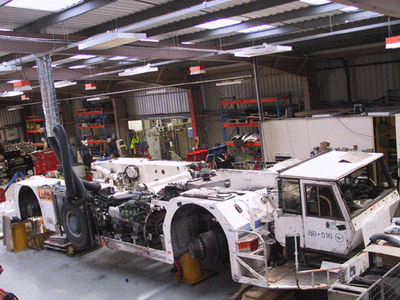
The special design of the Taxibot gives the pilot full control
of the system during the taxiing process, and uses the existing
airplane controls in the same way that the pilot is accustomed to
when taxiing using the airplane's engines. The use of the Taxibot
system requires no modification to the airplane and minimal
modifications to the airport infrastructure which will not affect
existing taxiways and runways.
More News
Waypoint A predetermined geographical position used for route/instrument approach definition, progress reports, published VFR routes, visual reporting points or points for transiti>[...]
Aero Linx: Sentimental Journey to Cub Haven Sentimental Journey Flyin began in 1986 with a group of dedicated volunteers working to provide a sentimental return to Lock Haven, the >[...]
The Pilot Would Often Fly Over Their House At A Low Altitude And That Family Members Would Go Outside To Wave On November 14, 2025, at 1708 eastern standard time, a Jabiru USA Spor>[...]
From 2024 (YouTube Edition): Volatus Infrastructure Paves The Way The name “Volatus” seems to be everywhere these days, popping up in a series of partnerships and proje>[...]
Fortnite Conquers All, Klyde FMI: www.klydemorris.com>[...]



 ANN's Daily Aero-Term (11.29.25): Waypoint


 See All