Aircraft Vision System 'Sees' Heat Sources & LED Airport Lighting Through Darkness And Weather
Astronics Corporation, through its wholly-owned subsidiary Astronics Max-Viz, has certified its 2300 Enhanced Vision System (EVS) to the DO-160G standard. Blending infrared and visible light sensors, the Max-Viz 2300 EVS displays real-time heat sources along with LED airport lighting to make it safer for pilots to land in dark, challenging conditions.
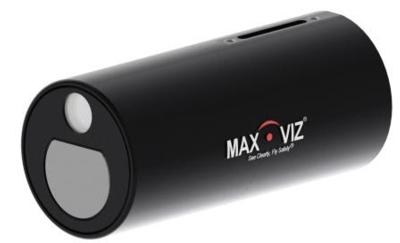
"With the airport lighting environment converting over to low-heat LEDs, many thermal imagers can no longer detect the runway lights," explained Astronics Max-Viz Sales Manager Grant Sumpter. "The Max-Viz 2300, however, with our blended thermal and visible light image, does "see" the lights, and can provide detailed information about the terrain to pilots in all kinds of weather and flight conditions. With the new certification to DO-160G, dedicated customer support and a 24-month warranty, we're pleased to bring this next level EVS safety to the market."
The Max-Viz 2300 provides pilots with an unprecedented level of situational awareness and safety by enabling them to see more precisely during day or night in adverse weather conditions, such as haze, smoke, smog and light fog, even in the darkest night. At night, pilots can also see and avoid clouds for a smoother ride. Upon landing, pilots using the Max-Viz 2300 can view the runway and terrain clearly to avoid wildlife and unlit obstructions.
This advanced EVS is a lightweight, affordable, multi-spectral imager that blends the separate signal from a long wave infrared sensor with a visible light sensor to present pilots with a single, sharp, real-time image. The blended thermal image is black and white, but a separate color HD-compatible signal from the visible light camera is available for routing to a cabin entertainment system for a complete color display.
The Max-Viz 2300 system is now certified to Radio Technical Commission for Aeronautics (RTCA) DO-160G standards, which is the industry standard for the environmental testing of avionics hardware and is recognized by the International Organization for Standardization (ISO) as the de facto international standard ISO-7137.
Astronics' Max-Viz 2300 EVS standard image format (blended infrared and visible light) allows for future integration with Synthetic Vision System (SVS) images to create a Combined Vision System (CVS), the emerging strategy in visibility technology for future aircraft. The CVS will provide pilots with greater assurance that transient obstacles and/or missing data in the Terrain Awareness and Warning System (TAWS) database will be detected.
Compatible with leading multi-functional displays (MFDs) and electronic flight bags (EFBs), the sensor image presents on any display that accepts composite video (RS-170) NTSC or PAL signals. The system meets or exceeds RTCA DO-160G standards, including resistance to temperature, altitude, humidity, shock, vibration, water, sand and dust, fungus, magnetic effect, power spikes, audio and radio frequencies, lightening, icing and flammability.
(Image provided with Astronics news release)



 Classic Aero-TV: VerdeGo Debuts VH-3 Hybrid-Electric Powerplant


 See All