More Than 100 People Coordinated Multiple Parameters, And Will
Do It Again
Although the second flight test of the X-51A Waverider scramjet
ended prematurely, the coordination and performance of the
Hypersonics Combined Test Force and the 419th Flight Test Squadron
was flawless. More than 100 people from both Edwards Air Force Base
and Naval Air Station Point Mugu took part in the enormously
complex flight test.
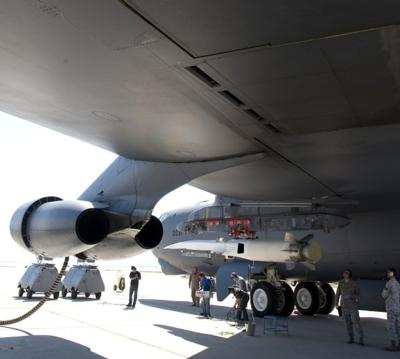
A B-52H Stratofortress on loan to
Edwards released the experimental vehicle from an altitude of
approximately 50,000 feet June 13, 2011. After release, the X-51
was initially accelerated by a solid rocket booster. The hypersonic
aircraft was successfully boosted to just over Mach 5 and the
scramjet engine lit, but it failed to transition to full power.
From reconfiguring the release mechanism from the previous test
attempt, to pushing the B-52 to its altitudinal limit, everyone
involved had to be at the top of their game throughout the entire
test process.
During a previous test attempt in March, the scramjet failed to
release from the B-52 and the team went to work to create a
solution. "The configuration we used to eliminate the problem has
never been used before," said Lt. Col. Todd Venema, Hypersonics
Combined Test Force director. Engineers had to reconfigure the
release charges to ensure the X-51 would be released successfully.
"We were very pleased with the eventual solution. It was a lot of
work over two months," said Colonel Venema.
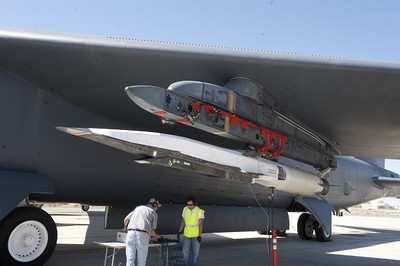
The flight test had several challenges that had to be worked
through and planned with extreme precision, such as the altitude
required to launch the X-51. "The B-52's flight envelope goes up to
50,000 feet, and that was the launch conditions for the X-51," said
Colonel Venema. "The B-52's crew is flying right at the very edge
of that aircraft's capability. It's quite surprising to me that a
flight that would be perfectly normal at 40,000 feet would have a
tremendous difference at 50,000 with difficulty and complexness."
He said the bomber has to work harder to keep pressurization, and
the temperature at that height required waivers from the air
crews.
For the X-51 to launch effectively, the B-52 was also required
to fly as fast as possible. "It's going absolutely as fast as it
can, and it's not that much above a stall margin," he said.
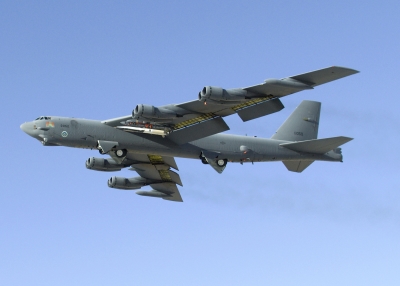
Colonel Venema added that the F-18 chase planes during the test
were at the edge of their envelope as well because the fighters had
to fly as slow as they could. "All of the aircraft in the area were
right at the edge of their capabilities, and that is a very
challenging thing," he said.
Fuel temperature was another constraint to the flight test. The
X-51's fuel could not drop below a certain temperature. This
required the B-52 to climb to the 50,000 level at an accelerated
rate, meaning it needed to be lighter and it could not have any
deviation from its course where extra fuel could be spent.
Barry Reed, Hypersonics CTF project engineer, said additional
obstacles running up to the test also included making sure the
ocean range was clear of ships and monitoring weather conditions.
"The morning of the test, even before the weather cleared, we got a
boat," Mr. Reed said. "That one cleared and then we had another
boat. Just one after another. We had to make radio contact with
these guys and it wasn't until the last possible moment in our
launch window that got a green range."
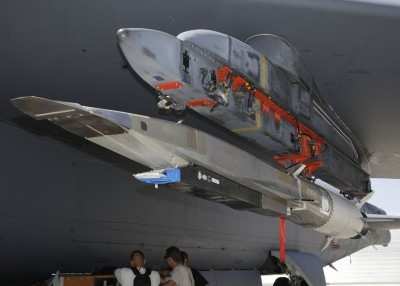
Boeing and Pratt & Whitney Rocketdyne built four X-51A
flight test vehicles with the program goal of reaching Mach 6 in
hypersonic flight. The next flight is tentatively scheduled for
this fall. "We're shooting for that Mach 6, 100-percent success
mark," said Mr. Reed. "We've already done the 90-percent success
test, now we want 100-percent success and to get more data to make
sure the United States remains the leader in hypersonic technology
development. We have two more vehicles left; we have two more
opportunities to make even more history."



 ANN's Daily Aero-Term (12.19.25): Ultrahigh Frequency (UHF)


 See All