
Aussie Company Receives Patent On Inflight Ice Detection System | Aero-News Network
Aero-News Network
RSS icon RSS feed
podcast icon MP3 podcast
Subscribe Aero-News e-mail Newsletter Subscribe

Airborne Unlimited -- Most Recent Daily Episodes

Episode Date

Airborne-Monday

Airborne-Tuesday

Airborne-Wednesday Airborne-Thursday

Airborne-Friday

Airborne On YouTube

Airborne-SpecialEpisode-12.15.25

AirborneNextGen-
12.16.25

Airborne-Unlimited-12.10.25

Airborne-AffordableFlyers-12.11.25

AirborneUnlimited-12.12.25

AFE 2025 LIVE MOSAIC Town Hall (Archived): www.airborne-live.net

Fri, May 23, 2008

Aussie Company Receives Patent On Inflight Ice Detection System

Swan International "Ice-Eye" Could Be Used On Most Aircraft

Sydney-based Swan International recently earned a US patent related to development of an Inflight Ice Detection System, which would rely on optical technologies to sense ice accumulating on aircraft surfaces.

The company tells ANN the US Patent Office issued patent No. 7370525 for The Swan International, Dual Channel, Optical Detection technique. The Swan Ice Detection System -- known as "Ice-Eye" -- utilizes optical technologies developed as part of the company's Predictive Windshear Detection development.

The system detects ice accretion on the aircraft by monitoring ice formation on a reference surface using optical discrimination techniques. Ice responds optically in a different way depending upon the incident light wave polarization. This optical polarization response of ice differs significantly to that of water or other substances that may also be on the surface.

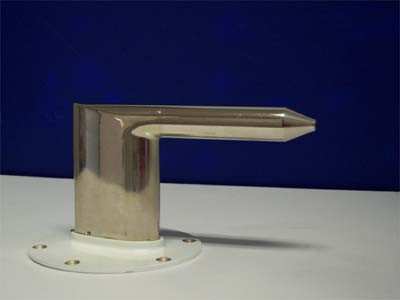
This high sensitivity sensor work by illuminating a small ice collecting window fixed in a sensor housing flush mounted on the tip of a heated sensor tube. The resulting backscattered light from the ice collecting surface is collected using polarization sensitive optical fibers. The detected light intensity for each fiber together with the intensity ratio indicates the presence of ice on the ice collecting surface.

The Swan Sensor performs the function of alerting the pilot to icing conditions, indicating the severity of such conditions and may activate the de-icing system. The company notes its system could be deployed on a wide variety of aircraft.

FMI: www.swaninter.com/

Advertisement

More News

Aero-TV: DeltaHawk’s Diesel Power Steps Into the Spotlight

Its Offerings Are Lighter, Cleaner, and Now Pushing Past 1,000nm on SAF Jet Fuel DeltaHawk’s diesel-powered aircraft lineup has seen incredible upgrades over the last few yea>[...]

NTSB Prelim: Mooney Aircraft Corp. M20K

The Airplane Experienced A Total Loss Of Engine Power On December 3, 2025, about 1600 central standard time, a Mooney Aircraft Corp. M20K, N57229, was substantially damaged when it>[...]

ANN FAQ: Turn On Post Notifications

Make Sure You NEVER Miss A New Story From Aero-News Network Do you ever feel like you never see posts from a certain person or page on Facebook or Instagram? Here’s how you c>[...]

ANN's Daily Aero-Linx (12.20.25)

Aero Linx: European Society of Aerospace Medicine (ESAM) As a pan-European, independent forum, it works to promote the safety and health of all persons involved in aviation and spa>[...]

Aero-News: Quote of the Day (12.20.25)

“We are excited to see Wisk achieve this milestone, and I’m so proud of the team that made it possible. The team at Wisk has built advanced technologies across flight c>[...]

blog comments powered by Disqus



Advertisement

Advertisement

Podcasts

Advertisement

© 2007 - 2025 Web Development & Design by Pauli Systems, LC

