Tue, May 17, 2011
Synthetic Vision For Pro Line 21 Coming In 2012
Just weeks after receiving its final TSO, Rockwell
Collins’ Pro Line Fusion integrated avionics system received
supplemental type certification (STC). The STC, issued by the FAA,
was achieved on the company’s experimental test aircraft.
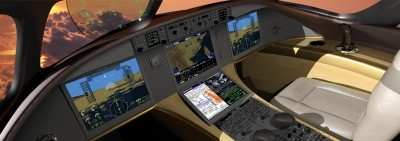
Pro Line Fusion brings new features currently not available in
the marketplace, including:
- An eyes-forward human interface featuring synthetic vision on
the head-up display (HUD).
- Intuitive airport visualization enhancements, including the
synthetic vision Airport Dome that orients pilots before descent
and target runway highlighting on the airport diagram.
- Networked capability enabling interoperability to synchronize
the aircraft and ground systems and make database updates.
- An open, software-based architecture which simplifies aircraft
certification using a proven functional software TSO approach, lets
original equipment manufacturers select the right computing
hardware footprint for each of the aircraft in their families, and
supports rapid deployment of new features as they are
certified.
“This certification affirms the flexibility and
adaptability of the Pro Line Fusion system, and enables aircraft
manufacturers to more easily install and certify the system on
their respective platforms,” said Greg Irmen, vice president
and general manager, Business and Regional Systems for Rockwell
Collins. “We continue to progress toward Pro Line
Fusion’s entry into service and are working with customers to
achieve more certifications in the coming months.”
For Operators of aircraft equipped with Rockwell Collins’
Pro Line 21 avionics, synthetic vision will soon be available. The
upgrade, available in 2012, will be offered for forward fit and
aftermarket installations of Pro Line 21. The announcement was made
at the 11th Annual European Business Aviation Convention &
Exhibition (EBACE) in Geneva, Switzerland.
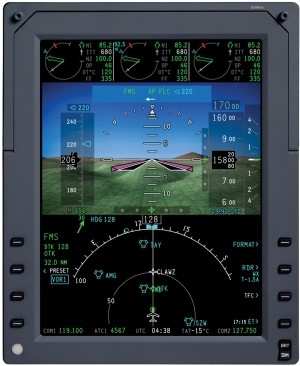
Synthetic vision technology better equips flight crews for
situational awareness in low visibility and unfamiliar territory by
providing a computer generated 3D depiction of terrain. Precise
navigation and integrity monitoring sensors provide a synthetic
view of the external environment, regardless of weather or time of
day, enhancing operational safety.
“Today, more than 4000 aircraft are flying with Pro Line
21, and more than 300 aircraft are delivering each year,”
said Greg Irmen, vice president and general manager, Business and
Regional Systems for Rockwell Collins. “Bringing this
advancement to Pro Line 21 is a prime example of our commitment to
provide the latest safety and situational awareness technologies to
one of the largest customer bases in business aviation
today.”
More News
Light Gun A handheld directional light signaling device which emits a brilliant narrow beam of white, green, or red light as selected by the tower controller. The color and type of>[...]
“We have performed extensive ground testing by comparing warm up times, full power tethered pulls, and overall temperatures in 100 degree environments against other aircraft >[...]
While Taxiing To Parking The Right Landing Gear Leg Collapsed, Resulting In Substantial Damage Analysis: The pilot made a normal approach with full flaps and landed on the runway. >[...]
From 2014 (YouTube Edition): Exotic Rebuild Reveals Aerial Work Of Art During EAA AirVenture 2014, ANN's Michael Maya Charles took the time to get a history lesson about a great ai>[...]
Also: Project Talon, McFarlane Acquisition, Sky-Tec Service, JPL Earth Helo Tests Bombardier has earned a round of applause from the business aviation community, celebrating the fo>[...]



 ANN's Daily Aero-Term (12.13.25): Light Gun


 See All