
FAA Issues SAFO On Cessna Seat Latches | Aero-News Network
Aero-News Network
RSS icon RSS feed
podcast icon MP3 podcast
Subscribe Aero-News e-mail Newsletter Subscribe

Airborne Unlimited -- Most Recent Daily Episodes

Episode Date

Airborne-Monday

Airborne-Tuesday

Airborne-Wednesday Airborne-Thursday

Airborne-Friday

Airborne On YouTube

Airborne-Unlimited-12.01.25

AirborneNextGen-
12.02.25

Airborne-Unlimited-11.19.25

Airborne-AffordableFlyers-11.20.25

AirborneUnlimited-11.21.25

LIVE MOSAIC Town Hall (Archived): www.airborne-live.net

Tue, Feb 03, 2009

FAA Issues SAFO On Cessna Seat Latches

Calls For Immediate Compliance With AD

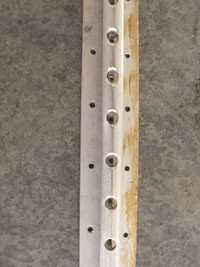
The FAA renewed on Monday its urgent call for owners and operators of many legacy Cessna high-wing aircraft to inspect seat tracks on their planes, for signs of potentially fatal wearing of the seat retention pins.

The latest Safety Alert for Operators (SAFO) concerns Airworthiness Directive 87-20-03 R2, which calls for periodic inspections of the seat tracks on pilot and co-pilot seats on Cessna 336 and 337 models, as well as pre-1986 single-engine Cessna models 150, 152, 170, 172, 175, 177, 180, 182, 185, 188, 190, 195, 205, 206, 207 and 210s.

The AD -- which also applies to Cessna T303 Crusader low-wing twins -- also mandates the repair or replacement of the tracks as necessary. The FAA called on pilots and operators to become familiar with the requirements and intervals of the AD, and also recommended that pilots and operators confirm their maintenance provider’s knowledge and accomplishment of the directive.

Failure of the seat retention pins at a critical moment -- on takeoff, for example -- could have dire consequences. As ANN reported, the National Transportation Safety Board determined in December that the September 2007 takeoff downing of a Cessna 180 was due to the failure of the seat retention pins. The NTSB believes the pilot instinctively pulled back on the plane's yoke when his seat slid back, leading to a violent departure stall.

In issuing the SAFO, the FAA noted Service Difficulty Reports (SDR) and accidents increased from nearly 2 per year (prior to 1996) to over 5 per year after 1996. The number of accidents statistically increased from 1 every 3 years (prior to 1996) to 1 every 20 weeks since 1996. In the past 20 years, 6 fatalities are known and 70 SDRs reported.

"These results indicate compliance to AD 87-20-03 R2 is not being accomplished for a significant number of airplanes," the FAA asserts.

FMI: FAA SAFO Web site , For questions contact Hieu Nguyen, Wichita Aircraft Certification Office, FAA at (316) 946-4129

Advertisement

More News

NTSB Prelim: Cirrus Design Corp SR20

The Airplane Made An Uncommanded Right Yaw And Roll, And He Was Unable To Maintain Control Of The Airplane On November 11, 2025, about 1750 central standard time, a Cirrus SR20, N8>[...]

ANN's Daily Aero-Linx (11.30.25)

Aero Linx: Florida Antique Biplane Association "Biplanes.....outrageous fun since 1903." That quote really defines what the Florida Antique Biplane Association (FABA) is all about.>[...]

ANN's Daily Aero-Term (11.30.25): Wind Shear Escape

Wind Shear Escape An unplanned abortive maneuver initiated by the pilot in command (PIC) as a result of onboard cockpit systems. Wind shear escapes are characterized by maximum thr>[...]

Aero-News: Quote of the Day (11.30.25)

“Working closely with the Polish Armed Forces, we’re focused on disciplined execution to help enhance Poland’s defense capabilities and keep up with the strong de>[...]

Airborne 11.26.25: Bonanza-Baron Fini, Archer v LA NIMBYs, Gogo Loses$$$

Also: Bell 505 on SAF, NYPA Gets Flak For BizAv 'Abuse', FAA Venezuela Caution, Horizon Update Textron Aviation has confirmed it will be ending production of the Beechcraft Bonanza>[...]

blog comments powered by Disqus



Advertisement

Advertisement

Podcasts

Advertisement

© 2007 - 2025 Web Development & Design by Pauli Systems, LC

