
Lockheed Martin WindTracer System Installed At Major Airports In Germany | Aero-News Network
Aero-News Network
RSS icon RSS feed
podcast icon MP3 podcast
Subscribe Aero-News e-mail Newsletter Subscribe

Airborne Unlimited -- Most Recent Daily Episodes

Episode Date

Airborne-Monday

Airborne-Tuesday

Airborne-Wednesday Airborne-Thursday

Airborne-Friday

Airborne On YouTube

Airborne-Unlimited-12.01.25

AirborneNextGen-
12.02.25

Airborne-Unlimited-11.19.25

Airborne-AffordableFlyers-11.20.25

AirborneUnlimited-11.21.25

LIVE MOSAIC Town Hall (Archived): www.airborne-live.net

Tue, Sep 03, 2013

Lockheed Martin WindTracer System Installed At Major Airports In Germany

Part Of Low Level Wind Shear Alert System

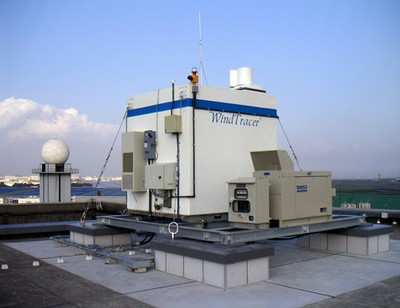
The German Weather Service (DWD) has installed Lockheed Martin WindTracer Doppler lidar systems at the Frankfurt and Munich airports as part of the Low Level Wind Shear Alert System (LLWAS). Selex Systems Integration provided the LLWAS, which includes WindTracer lidar and weather radar. By adding the system at the two largest airports in Germany, DWD takes a leading role in Europe, following International Civil Aviation Organization (ICAO) Recommendation to provide concise information on wind shear which could adversely affect aircraft on the approach or take-off path.

WindTracer monitors atmospheric conditions and measures wind speed and direction along airport flight paths. It complements radar by excelling in dry and clear weather conditions. By using WindTracer, Selex has developed Europe's first radar and lidar operational integration for wind shear detection in all weather conditions.

In Europe, Frankfurt is the third busiest airport, having handled 57.5 million passengers in 2012, according to Airports Council International, and Munich is the seventh busiest, accommodating over 38 million passengers in 2012. "WindTracer represents an affordable wind shear detection system for customers around the globe. Combined with weather radar, the system gives the airport a comprehensive picture of wind hazards," said Dr. Michael Margulis, director of WindTracer Programs at Lockheed Martin. "As a result, the highest detection rate for wind hazards, in both dry and wet environments, is achieved."

WindTracer operates by transmitting pulses of eye-safe infrared laser light that reflect off naturally occurring aerosol particles in the atmosphere. Wind moves these particles, which alters the frequency of the light that is scattered back to the system. WindTracer processes the return signal and automatically detects hazardous winds to ensure operational safety during high-impact weather.

FMI: www.lockheedmartin.com/windtracer

Advertisement

More News

NTSB Prelim: Cirrus Design Corp SR20

The Airplane Made An Uncommanded Right Yaw And Roll, And He Was Unable To Maintain Control Of The Airplane On November 11, 2025, about 1750 central standard time, a Cirrus SR20, N8>[...]

ANN's Daily Aero-Linx (11.30.25)

Aero Linx: Florida Antique Biplane Association "Biplanes.....outrageous fun since 1903." That quote really defines what the Florida Antique Biplane Association (FABA) is all about.>[...]

ANN's Daily Aero-Term (11.30.25): Wind Shear Escape

Wind Shear Escape An unplanned abortive maneuver initiated by the pilot in command (PIC) as a result of onboard cockpit systems. Wind shear escapes are characterized by maximum thr>[...]

Aero-News: Quote of the Day (11.30.25)

“Working closely with the Polish Armed Forces, we’re focused on disciplined execution to help enhance Poland’s defense capabilities and keep up with the strong de>[...]

Airborne 11.26.25: Bonanza-Baron Fini, Archer v LA NIMBYs, Gogo Loses$$$

Also: Bell 505 on SAF, NYPA Gets Flak For BizAv 'Abuse', FAA Venezuela Caution, Horizon Update Textron Aviation has confirmed it will be ending production of the Beechcraft Bonanza>[...]

blog comments powered by Disqus



Advertisement

Advertisement

Podcasts

Advertisement

© 2007 - 2025 Web Development & Design by Pauli Systems, LC

