

Philadelphia Jury Blames Lycoming For 1999 PA-28 Crash | Aero-News Network
Aero-News Network
RSS icon RSS feed
podcast icon MP3 podcast
Subscribe Aero-News e-mail Newsletter Subscribe

Airborne Unlimited -- Most Recent Daily Episodes

Episode Date

Airborne-Monday

Airborne-Tuesday

Airborne-Wednesday Airborne-Thursday

Airborne-Friday

Airborne On YouTube

Airborne-Unlimited-12.08.25

AirborneNextGen-
12.02.25

Airborne-Unlimited-12.03.25

Airborne-FltTraining-12.04.25

AirborneUnlimited-12.05.25

AFE 2025 LIVE MOSAIC Town Hall (Archived): www.airborne-live.net

Fri, Apr 09, 2010

Philadelphia Jury Blames Lycoming For 1999 PA-28 Crash

Awards $89 Million To Survivor And Families

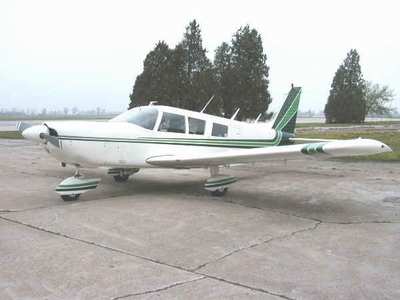
A Common Pleas Court in Philadelphia has awarded $89 million to the survivor of a 1999 plane crash in Youngstown, Ohio, as well as the families of those who lost their lives in the accident. The 11-member jury said that engine manufacturer Lycoming knew about and concealed a known carburetor problem with the engine in the 1968 Piper Cherokee. The airplane went down just after a refueling stop in Youngstown, Ohio, killing four people and leaving one 15-year-old survivor. Court awarded $25 million in compensatory damages, and $64 million in punitive damages.

File Photo

The Associated Press reports that the case has been in litigation for 10 years. Twice, the Pennsylvania Supreme Court had dismissed arguments by Lycoming that very large claims are barred in cases involving defects in airplanes more than 18 years old.

The probable cause report from the NTSB, which is not admissible as evidence in such cases, makes no mention of any engine problems. It indicates pilot error was the likely cause of the accident:

"After landing, the airplane's main fuel tanks were filled, and the five people got back onboard. The tail was almost touching the ground, and the airplane was sitting nose high. After takeoff, the airplane appeared to have a hard time climbing out, and was 'hanging on the prop.' The airplane turned toward a left downwind. It was initially nose high, then started to slowly lose altitude. Altitude loss quickened, the airplane's nose fell through, and the airplane maintained a sliding, left turn until it impacted the ground about 1/2 mile southwest of the airport. The engine was heard 'roaring' prior to impact, chordwise scratches were found on the propeller blades, and rotational marks were found on the starter housing. The estimated weight of the airplane was approximately 10 pounds under maximum gross weight, while center of gravity computations, using several different baggage loading scenarios, ranged from 1.1 inches, to 0.3 inches, forward of the aft center of gravity limit. Temperature at the time of the accident was 81 degrees Fahrenheit, and the density altitude was about 2,600 feet msl.

"The National Transportation Safety Board determines the probable cause(s) of this accident as follows:

"The pilot's loss of control of the airplane during a turn. Factors include the pilot's failure maintain sufficient airspeed, and his failure to maintain the airplane in proper trim."

FMI: www.ntsb.gov

Advertisement

More News

NTSB Final Report: Patriot Aircraft LLC CX1900A

After Draining Both Wing Fuel Tanks, A Significant Amount Of Water Was Observed In The Right Wing Fuel Tank Analysis: The pilot, who was also the owner of the experimental amateur->[...]

Aero-News: Quote of the Day (12.06.25)

“Airbus apologises for any challenges and delays caused to passengers and airlines by this event. The Company thanks its customers, the authorities, its employees and all rel>[...]

ANN's Daily Aero-Term (12.06.25): High Speed Taxiway

High Speed Taxiway A long radius taxiway designed and provided with lighting or marking to define the path of aircraft, traveling at high speed (up to 60 knots), from the runway ce>[...]

ANN's Daily Aero-Linx (12.06.25)

Aero Linx: Taylorcraft Foundation, Inc. The Taylorcraft Foundation is exclusively organized for charitable, educational & scientific activities and will preserve the history an>[...]

Airborne-NextGen 12.02.25: Honda eVTOL, Arctus High-Alt UAS, Samson Patent

Also: USAF Reaper Accident, Baikonur Damage, Horizon eVTOL IFR/FIKI, New Glenn Update Honda has outlined its clearest timeline yet for its entry into the world of electric vertical>[...]

blog comments powered by Disqus



Advertisement

Advertisement

Podcasts

Advertisement

© 2007 - 2025 Web Development & Design by Pauli Systems, LC

