
Sikorsky: Off-Balance Black Hawk Tail Rotor Would Be A 'Minor' Issue | Aero-News Network
Aero-News Network
RSS icon RSS feed
podcast icon MP3 podcast
Subscribe Aero-News e-mail Newsletter Subscribe

Airborne Unlimited -- Most Recent Daily Episodes

Episode Date

Airborne-Monday

Airborne-Tuesday

Airborne-Wednesday Airborne-Thursday

Airborne-Friday

Airborne On YouTube

Airborne-Unlimited-12.08.25

AirborneNextGen-
12.02.25

Airborne-Unlimited-12.03.25

Airborne-FltTraining-12.04.25

AirborneUnlimited-12.05.25

AFE 2025 LIVE MOSAIC Town Hall (Archived): www.airborne-live.net

Mon, Jan 09, 2017

Sikorsky: Off-Balance Black Hawk Tail Rotor Would Be A 'Minor' Issue

Company Responds To Army Report Stemming From 2015 Accident

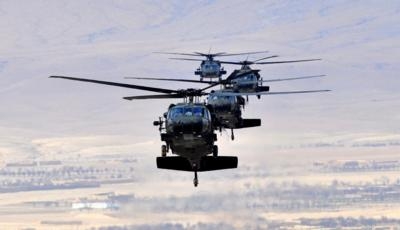
In its investigation of an accident involving a UH-60 Black Hawk helicopter in November, 2015, the U.S. Army reported that the aircraft was "not airworthy" from November 10 until the accident occurred on November 15 because "the tail rotor had been out of balance (greater than 0.7 inches per second)"

But Sikorsky, which manufactures the helicopter, has a different view. The Killeen Daily Herald reports that the company contends that an off-balance tail rotor is "a very minor discrepancy that would not have an impact on the flight characteristics of the aircraft."

Four soldiers from Fort Hood were fatally injured when the helicopter went down.

The U.S. Army report also states that the aircraft did not experience a mechanical failure, and a visual inspection of the helo after the accident "revealed no pre-existing defects or anomalies that would have contributed to this accident.”

Sikorsky spokesman Paul Jackson said that the company was not part of the investigation and has no knowledge of the Army's report. He said he was providing the information about the tail rotor for informational purposes only.

Jackson said that his experts also contend that an unbalanced tail rotor would not cause a flight path stabilization warning to activate. “If there is a failure in the Flight Path Stabilization (FPS) System, the Master Caution and FPS caution/warning lights would illuminate, but there is no audible warning,” he said. “We cannot comment on any impact the warning lights may have had on the pilot flying the aircraft.”

Jackson said that the UH-60 can be manually flown without an operational FPS system.

The First Army Division West released a separate report in September that listed pilot error as the cause of the accident. The Army report in December redacted that information.

(Image from file)

FMI: www.army.mil, www.sikorsky.com

Advertisement

More News

NTSB Final Report: Patriot Aircraft LLC CX1900A

After Draining Both Wing Fuel Tanks, A Significant Amount Of Water Was Observed In The Right Wing Fuel Tank Analysis: The pilot, who was also the owner of the experimental amateur->[...]

Aero-News: Quote of the Day (12.06.25)

“Airbus apologises for any challenges and delays caused to passengers and airlines by this event. The Company thanks its customers, the authorities, its employees and all rel>[...]

ANN's Daily Aero-Term (12.06.25): High Speed Taxiway

High Speed Taxiway A long radius taxiway designed and provided with lighting or marking to define the path of aircraft, traveling at high speed (up to 60 knots), from the runway ce>[...]

ANN's Daily Aero-Linx (12.06.25)

Aero Linx: Taylorcraft Foundation, Inc. The Taylorcraft Foundation is exclusively organized for charitable, educational & scientific activities and will preserve the history an>[...]

Airborne-NextGen 12.02.25: Honda eVTOL, Arctus High-Alt UAS, Samson Patent

Also: USAF Reaper Accident, Baikonur Damage, Horizon eVTOL IFR/FIKI, New Glenn Update Honda has outlined its clearest timeline yet for its entry into the world of electric vertical>[...]

blog comments powered by Disqus



Advertisement

Advertisement

Podcasts

Advertisement

© 2007 - 2025 Web Development & Design by Pauli Systems, LC

